Pumps for Indian Pharmaceutical Manufacturing: A Selection Guide for API Synthesis, Solvent Transfer, and cGMP-Compliant Loops
India produces about 20% of the world’s generic drug volume and operates more WHO-GMP certified facilities than any other country. Behind that scale sits a manufacturing buildout still accelerating in 2026: the central PLI Scheme for Bulk Drugs (₹6,940 crore outlay) has cleared 48 projects covering 33 critical KSMs/DIs/APIs with ₹4,814 crore of investment already deployed, and the broader PLI Scheme for Pharmaceuticals (₹15,000 crore outlay) has drawn ₹41,920 crore in actual investment across 55 selected companies. New API/KSM application rounds remain open into 2026, and bulk-drug parks in Gujarat, Andhra Pradesh, and Himachal Pradesh are starting to commission process plants. Every one of those plants depends on a small number of fluid-handling stations to actually function — and the pumps at those stations are not interchangeable with general industrial units.

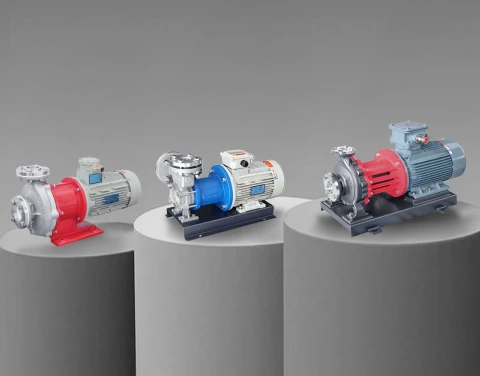
We have shipped magnetic-drive and canned-motor pumps into Indian pharmaceutical equipment OEMs and end-user API plants for more than a decade. The patterns we see in service failures are consistent: pumps spec’d for clean process water failing on dilute HCl streams, mechanical-seal pumps leaking solvent into PESO-classified zones, and dosing pumps with too-large turn-down delivering inconsistent batch volumes that fail USP<905> content uniformity. This guide covers how to specify pumps for the eight major fluid-handling stations in an Indian pharmaceutical plant — from API synthesis reactor circulation through formulation dosing — with attention to the cGMP, ICH Q7, and PESO requirements that apply in Indian regulatory practice.

1. The Pump Stations of a Modern Indian Pharmaceutical Plant

An API or formulation plant has between eight and twelve distinct pump duties, each with different fluid chemistry, different temperature and pressure, and a very different worst-case failure mode. Understanding the full landscape is the precondition for sensible per-station pump specification:

●   API reactor circulation — recirculation through glass-lined or Hastelloy reactor jackets and tube bundles. Aggressive synthesis chemistry, 5–6 bar working pressure, frequent batch changeover.

●   Solvent transfer — bulk movement of methanol, isopropanol, acetone, ethanol, MEK, DMF, NMP, and chlorinated solvents from tank farm to reactor. PESO-classified zones with explosion-proof motor requirements.

●   Acid and base transfer — concentrated HCl, H₂SO₄, NaOH, KOH metered into reactors for pH adjustment, salt formation, and crystallization.

●   Reactor jacket heating and cooling — thermal oil loops for high-temperature reflux, chilled brine or glycol for crystallization and quench cooling.

●   Purified water and WFI distribution — USP<1231>-grade purified water and Water for Injection circulating through ring main loops at 70–85 °C.

●   CIP/SIP cleaning and sterilization — hot caustic, hot acid, and steam condensate moving through equipment trains between batches.

●   Formulation and sterile dosing — precision metered transfer of API solutions, excipients, and solvents into mixing vessels and filling lines.

●   Effluent and solvent recovery — recovered solvent from condensers, distillation column reflux, and effluent transfer to ZLD treatment plants increasingly mandated in Indian pharma clusters.

Five constraints apply across every one of these stations: zero leakage of regulated solvents and toxic intermediates, zero metal-ion or elastomer contamination of the process fluid, documented material traceability for cGMP audits, ability to withstand frequent CIP/SIP thermal cycling without degradation, and electrical compliance with Indian Petroleum and Explosives Safety Organisation (PESO) certification for solvent-handling zones.

Pumps for Indian Pharmaceutical Manufacturing: A Selection Guide for API Synthesis, Solvent Transfer, and cGMP-Compliant Loops
2. API Synthesis Reactor Circulation: Glass-Lined and Hastelloy Pump Selection

API synthesis is the chemically hardest duty in the plant. Reactions involve concentrated mineral acids (HCl, HBr, H₂SO₄), strong bases, halogenated intermediates, oxidizers, and metal-catalyzed transformations. Reactor vessels themselves are typically glass-lined carbon steel for highly corrosive duty, or Hastelloy C-22/C-276 where the chemistry permits metallic construction. The pumps that recirculate reactor contents — through external heat exchangers, filtration trains, and sampling loops — need to match that material compatibility.

Three practical pump-selection decisions for API reactor service:

●       Fluoropolymer-lined wetted parts for halogenated and acidic chemistry. PTFE-, ETFE-, or PFA-lined pump housings provide chemical inertness equivalent to the glass-lined reactor itself. Pump-side stainless-steel components leach iron into the batch and fail USP<232> elemental impurity limits within months. Our AMC-F PTFE-lined magnetic drive pump is the unit we ship most often into Hyderabad and Vapi-cluster API plants for HCl, HBr, and halogenated intermediate service.

●       Seal-less magnetic-drive architecture. Mechanical seals fail predictably on API synthesis service — solvent attack on elastomers, crystallization of dissolved salts at the seal face, and frequent batch-change thermal cycling combine to make 6–12 month seal life common. Magnetic-drive pumps with silicon-carbide bearings eliminate the dynamic seal entirely. For broader engineering background, see our industrial magnetic drive pump selection guide.

●       Tolerance for entrained gas and partial dry-running. Reactor circulation pumps see gas pockets from CO₂ evolution, hydrogen release on reduction reactions, and air entrainment during reactor charging. Centrifugal pumps cavitate against these; regenerative-turbine vortex magnetic-drive pumps tolerate 10–15% entrained gas without head loss. This is the same gas-handling advantage that matters in MTC pumps and slurry transfer.

For lower-aggression API services (intermediate purification, organic salt suspensions, neutral pH operations), a 316L stainless magnetic-drive vortex pump is often sufficient. The MDH stainless steel vortex magnetic drive pump family covers this duty for Gujarat and Maharashtra API plant integrators we work with directly.

3. Solvent Transfer Pumps: Methanol, IPA, Acetone, DMF, NMP, and Chlorinated Solvents

A typical bulk drug API plant uses 5–15 different organic solvents in production. The pump stations that move these solvents between tank farm, day tank, and reactor charge port are where most plants accumulate hidden risk. Two issues dominate:

●       PESO-classified zone compliance. Solvent handling areas in Indian plants are classified by PESO as Zone 1 or Zone 2 based on the likelihood of flammable atmosphere. Pump motors in these zones must carry valid PESO approval (the Indian equivalent of ATEX certification). Standard induction motors are not acceptable; the pump must be ordered with explosion-proof motor variants matched to the gas group and temperature class of the specific solvent. Methanol, ethanol, acetone, and IPA fall into Gas Group IIA T2 in most plants; DMF and NMP fall into IIA T3 due to higher autoignition temperature.

●       Solvent compatibility with wetted parts and seals. NMP and DMF attack standard Buna and EPDM elastomers and degrade most FKM grades over months of service. Chlorinated solvents (dichloromethane, chloroform) further degrade carbon steel pump bodies. The right material specification is 316L stainless wetted parts as a minimum, with PTFE or PFA-lined construction for chlorinated and halogenated solvent duty. The magnetic-drive structure eliminates dynamic seal exposure entirely, removing the elastomer failure mode that mechanical-seal solvent pumps suffer from.

For bulk solvent transfer in the 50–300 L/min flow range typical of Indian API plants, our MDW stainless steel vortex magnetic pump in 316L mirror-polished construction with PESO-certified explosion-proof motor is the configuration we ship most often. For trace-HCl-containing solvent streams (e.g., wet methanol from condenser recovery), the AMC-F PTFE-lined variant is the cleaner choice. For continuous high-purity solvent recovery service where even static O-ring exposure is undesirable, the PWH/PWD/PWM canned vortex pump series is the structural alternative — the canned-motor design eliminates the magnet coupling space entirely. The deeper logic on these three architectures is in our canned motor pump technology guide.

Pumps for Indian Pharmaceutical Manufacturing: A Selection Guide for API Synthesis, Solvent Transfer, and cGMP-Compliant Loops
4. Reactor Jacket Heating and Cooling: Hot Oil and Chilled Brine Loops

Most pharmaceutical synthesis runs require precise jacket temperature control — 50–180 °C for organic reflux reactions, −10 to +5 °C for crystallization cooling, occasionally up to 250 °C for high-temperature dehydration or ring-formation steps. The thermal fluid loop circulating heat to and from the reactor jacket is one of the most continuously-loaded pump stations in the plant, and it splits into two distinct duties:

Hot thermal oil circulation

Diphenyl-based or alkylated aromatic thermal fluids (Therminol, Dowtherm, Marlotherm) circulate at 180–300 °C. At these temperatures the elastomers in a standard mechanical-seal pump degrade within months, and any seal leakage of hot oil onto a flange or pipe surface is an immediate fire risk. For background on hot oil pump selection, see our centrifugal vs gear hot oil pump selection guide and the broader high-temperature pump solutions page.

For 180–300 °C jacket service, the coupled high-temperature hot oil pump architecture is the industry default in Indian plants — an air-cooled stub shaft separates the mechanical seal from the hot process zone, allowing seals to operate at much lower temperature. Our WRY-H coupled high-temperature thermal oil pump handles up to 400 °C and is the configuration we have specified into multiple Maharashtra and Telangana API plant retrofits.

Chilled brine and glycol circulation

For crystallization, quench cooling, and post-reaction temperature control down to −30 °C, propylene glycol-water or ethylene glycol-water at 30–50% concentration is the typical heat-transfer fluid. The pump duty is gentler chemically than API reactor service but with similar pressure (4–6 bar) and continuous duty cycle. Standard 316L magnetic-drive vortex pumps with VFD-controlled synchronous PM motors fit this duty cleanly. Our MDS stainless steel vortex magnetic drive pump family covers the typical 100–500 L/min range.

Pumps for Indian Pharmaceutical Manufacturing: A Selection Guide for API Synthesis, Solvent Transfer, and cGMP-Compliant Loops

5. Purified Water, WFI, and CIP/SIP Loop Pump Specification

USP<1231> Purified Water (PW) and USP<1231> Water for Injection (WFI) are the cleanest fluids in the pharmaceutical plant. They are also the most demanding pump duties from a contamination-control standpoint. Three engineering constraints define pump selection for this service:

●       Sanitary surface finish. Wetted surfaces must be electropolished to Ra 0.4 µm or better for PW service, and to Ra 0.25 µm for WFI ring main service. Standard industrial pump finishes (Ra 0.8–1.6 µm) trap proteins and provide nucleation sites for biofilm. Sanitary tri-clamp connections (DIN 32676 or ASME BPE) are mandatory.

●       Drain-down and dead-leg avoidance. Pump geometry must allow complete drain-down without trapped pockets. Standard volute pumps with bottom-discharge orientation create dead legs that fail USP biofilm criteria; horizontal self-draining configurations or vertical mag-drive designs without low pockets are required.

●       CIP/SIP compatibility. The same pump is cleaned in place with 1–2% NaOH or HNO₃ at 75–85 °C, and sterilized in place with saturated steam at 121–134 °C. Wetted materials must tolerate this thermal cycling without warpage or seal degradation. Magnetic-drive architecture with silicon-carbide bearings handles the thermal cycling reliably; standard mechanical-seal designs lose seal life rapidly under CIP/SIP duty.

For PW and WFI ring main circulation in the 50–500 L/min range, the typical specification is a 316L mirror-polished mag-drive vortex pump with electropolish on all wetted surfaces. The MDH and MDS magnetic-drive vortex families ship with optional sanitary tri-clamp connections and ASME BPE-compliant surface finish on request — standard for Indian formulation plant and biopharma OEM specifications.

6. Precision Dosing for Formulation and Sterile Processing

Pharmaceutical formulation steps depend on volumetric accuracy that no centrifugal or vortex pump can reliably deliver. Dosing API solutions into batch vessels, metering excipient concentrates into IV bag filling lines, transferring active ingredient into vial filling machines — all of these need positive-displacement accuracy within ±0.5% per stroke. This is gear pump or peristaltic pump territory.

Four duties worth distinguishing:

●       Micro-dosing for active ingredient transfer. Sub-litre per minute flow with high accuracy and very low pulsation, into mixing tanks during formulation. Our MDC-M micro mini magnetic gear pump is built specifically for this duty — magnetic-drive eliminates contamination from shaft penetration, and the small-displacement gear set provides repeatable volumetric output.

●       Mid-range formulation dosing. 5–50 L/min metering of API solutions or excipient concentrates between formulation vessels. The MDC-K magnetic gear pump handles this range with internal gear architecture that produces lower pulsation than external-gear designs.

●       Higher-flow dosing for sterile process loops. 50–200 L/min positive-displacement service for sterile fill-finish operations. The MDC-X medium-large magnetic gear pump covers this range with the same seal-less magnetic-drive architecture.

●       Tabletting wet granulation binder dosing. Polymer binder solutions (PVP, HPMC, starch paste) sprayed into granulators during oral solid dosage manufacture. Viscosity 50–500 cP, intermittent duty, repeatable volume requirement. Internal gear magnetic drive is again the right architecture; for broader viscosity-vs-architecture background, see our pumping high viscosity fluids selection guide and positive displacement pump working principle and selection guide.

7. Why Magnetic Drive Architecture Maps Onto cGMP and ICH Q7 Requirements

Indian pharma plants are inspected against multiple overlapping regulatory frameworks — cGMP under US 21 CFR Part 211, ICH Q7 for API manufacture, WHO TRS 986 Annex 2, and EU Annex 1 for sterile manufacturing. Each of these treats pump selection as a critical-equipment decision. Five concrete points where magnetic-drive architecture aligns better with regulatory expectations than mechanical-seal alternatives:

●       Elimination of seal-flush water as a cross-contamination path. Mechanical-seal pumps usually require an external seal-flush water circuit. That circuit can carry contaminants from elsewhere in the plant into the process stream. Magnetic-drive pumps require no external flush, which simplifies the contamination-pathway analysis required in cGMP risk assessment.

●       Material traceability and documentation. 21 CFR Part 211.65 requires that equipment surfaces in contact with components, in-process materials, and drug products shall not be reactive, additive, or absorptive. Mag-drive pumps with 316L or fluoropolymer wetted parts ship with material test certificates and full traceability, supporting the audit trail.

●       Reduced fugitive emissions for occupational safety. OEL (Occupational Exposure Limit) compliance for high-potency APIs and solvent vapors is simpler with seal-less pumps. ICH Q9 risk-based assessment treats containment of high-potency compounds as a primary engineering control, and seal-less architecture is the textbook response.

●       Predictable cleaning validation. Cleaning validation studies under PIC/S Annex 15 require demonstrated removal of residue to below pre-defined acceptance criteria. Mag-drive pump internals with mirror polish and minimal dead legs cleaning-validate more reliably than mechanical-seal designs with their seal-chamber cavities.

●       Service-interval planning aligned to plant shutdowns. Mechanical-seal life of 6–18 months on solvent service forces unscheduled maintenance. Magnetic-drive pumps with silicon-carbide bearings routinely demonstrate 30,000–50,000 hour intervals between planned bearing replacement, aligning with annual plant turnaround rather than triggering unplanned downtime. For broader maintenance economics, see our chemical pump parts lifespan and maintenance guide.

8. Indian Pharma OEM Considerations: Voltage, PESO, Monsoon Humidity, and the PLI Buildout

A pump shipped into an Indian pharmaceutical project has to meet local electrical, regulatory, and environmental conditions that are not always covered in standard manufacturer datasheets. Five specifics worth specifying explicitly at the order stage:

ConsiderationIndian PracticePump Specification Impact
Electrical supply415 V ±10%, three-phase, 50 Hz; rural sites may see ±15%Motor must tolerate wider voltage swing without thermal trip; oversized thermal protection recommended
PESO certificationRequired for pump motors in Zone 1 or Zone 2 solvent areasSpecify Ex d IIB T4 or higher at order; verify PESO certificate number on documentation
Ambient temperaturePlant rooms 35–45 °C summer; coastal humidity 80–95% during monsoonMotor de-rating for ambient; tropicalised motor windings; corrosion protection on exposed surfaces
Monsoon humidityUp to 95% RH May–September; condensation on cold equipment surfacesIP65 or higher enclosure on terminal boxes; conformal coating on electronics
Grid reliabilityFrequent micro-outages; DG backup standardSoft-start motor or VFD with restart-on-recovery logic; capacitor protection against transient surges
Spare parts logisticsReplacement lead time from Europe 8–12 weeksStandardize on suppliers with Indian stocking inventory; specify mechanical seal kits, bearing sets, magnet sets locally

These are not theoretical concerns. The PLI-driven plant buildout in Gujarat (Vapi, Vadodara, Ankleshwar, Dahej, Jhagadia), Telangana (Hyderabad-Sangareddy cluster), Andhra Pradesh (Visakhapatnam-Atchutapuram), and Tamil Nadu (Cuddalore) is happening on tight commissioning timelines under bulk-drug-park development frameworks. Indian pharma equipment OEMs and EPC contractors are increasingly specifying suppliers with proven Indian project history rather than international suppliers without local commissioning support.

9. Aulank Pharmaceutical Pump Portfolio for Indian Plants

We have supplied magnetic-drive and canned-motor pumps into Indian pharmaceutical and fine-chemical projects since 2018, including direct shipments to API plant integrators in Vapi-Vadodara, formulation plant equipment OEMs in Mumbai-Pune, and electrolyte/intermediate manufacturers in Hyderabad and Visakhapatnam. The portfolio matrix we typically recommend across an API or formulation plant:

StationService ConditionsRecommended Aulank Pump
API reactor circulation (acid/halogenated)pH < 2, 60–120 °C, 3–6 barAMC-F PTFE-lined magnetic drive
API reactor circulation (neutral)pH 5–9, 40–100 °C, 3–6 barMDH or MDS stainless magnetic-drive vortex
Bulk solvent transferMethanol, IPA, acetone, DMF in PESO Zone 1/2MDW with PESO-certified explosion-proof motor
Chlorinated solvent transferDCM, chloroform, EDCAMC-F PTFE-lined magnetic drive
Hot thermal oil reactor jacket180–300 °C therminol or marlothermWRY-H coupled high-temperature thermal oil pump
Chilled brine/glycol cooling−30 to +10 °C, 30–50% glycol-waterMDS or MDK magnetic-drive vortex
Purified water / WFI ring main70–85 °C, sanitary, ASME BPEMDH or MDS with electropolish and sanitary tri-clamp
CIP cleaning circulation1–2% NaOH/HNO₃, 75–85 °CMDS stainless magnetic-drive vortex
Formulation micro-dosing0.1–5 L/min, ±0.5% accuracyMDC-M micro mini magnetic gear pump
Formulation mid-range dosing5–50 L/min, ±1% accuracyMDC-K magnetic gear pump
Sterile fill-finish loop50–200 L/min, sterileMDC-X medium-large magnetic gear pump
Solvent recovery / condensateRecovered solvent, 50–80 °C, continuousPWH/PWD/PWM canned vortex

Specific value Indian pharmaceutical OEMs get from us:

●   PESO-certified motor variants available across MDH, MDW, MDS, MDC, and AMC-F families for Zone 1 and Zone 2 solvent service.

●   Tropicalised motor windings and IP65 terminal box enclosures on monsoon-region shipments by default.

●   Sanitary specification options including ASME BPE electropolish, tri-clamp connections, and full material traceability with mill test certificates for cGMP documentation.

●   Voltage and frequency customization — 415 V ±15% tolerance, 50 Hz, three-phase as Indian default; single-phase 230 V and DC options for laboratory and pilot plant duty.

●   Documented quality control — ISO 9001, TÜV CE on magnetic drive vortex pumps, individual parameter test records, full material traceability suitable for FDA and WHO-GMP audits. For broader background on our 17+ years of magnetic-drive pump engineering and the 10 core technologies behind the product line, including our synchronous permanent-magnet drive structure, customers can review the corrosion-resistance documentation in our corrosion-resistant pump solutions page and the leak-prevention engineering details in our leak-proof pump solutions page.

If you are sourcing pumps for a PLI-funded bulk drug plant, a new formulation facility, or a retrofit on an existing API manufacturing line, send us your station-by-station application conditions and we will return a recommended pump portfolio with PESO certificate references, material test documentation, and quotes within two business days.

Get a Custom Pharmaceutical Pump Configuration for Your Indian Plant

Whether you are an API plant engineering team in Vapi or Hyderabad, a formulation equipment OEM in Mumbai or Pune, a glass-lined reactor builder in Ahmedabad, or an EPC contractor commissioning a PLI-funded bulk drug park — our engineering team can match the right magnetic-drive or canned-motor pump architecture to each fluid-handling station in your design.

Talk to our team: Contact Aulank | WhatsApp: +86 13773157367 | Email: info@aulankpump.com

Browse the relevant product and solution pages:

●   Chemical Pump Series

●   Magnetic Vortex Pump Series

●   Positive Displacement Pump Series

●   Corrosion Resistant Pump Solutions

FAQ

What kind of pump is used for API reactor circulation in Indian pharmaceutical plants?

API reactor circulation pumps in Indian plants are almost always magnetic-drive units. For acid, halogenated, or chlorinated synthesis chemistry, PTFE- or ETFE-lined magnetic drive pumps provide the chemical compatibility equivalent to the glass-lined reactor itself, with the seal-less architecture eliminating mechanical-seal failure under aggressive duty. For neutral-pH organic synthesis and crystallization service, 316L stainless mirror-polished magnetic drive vortex pumps are sufficient and ship with USP <232> elemental impurity documentation. Aulank’s AMC-F PTFE-lined and MDH/MDS stainless magnetic drive pump families cover both duty classes and are configured for typical 3–6 bar working pressure in Hastelloy or glass-lined reactor installations.

Does my pump need PESO certification for solvent handling areas in India?

Yes — any pump motor installed in a PESO-classified Zone 1 or Zone 2 area in an Indian pharmaceutical plant must carry valid PESO approval. PESO (Petroleum and Explosives Safety Organisation) is the Indian authority for explosion-proof equipment certification, broadly equivalent to ATEX in the EU or IECEx internationally. The gas group and temperature class must match the specific solvent being handled: methanol, ethanol, acetone, and IPA usually fall into IIA T2; DMF and NMP into IIA T3. Buying a pump without proper PESO certification creates regulatory exposure on inspection and may invalidate the plant’s explosion safety license. Aulank ships PESO-certified motor variants across the MDH, MDW, MDS, MDC, and AMC-F product families for Indian solvent-handling applications.

How do magnetic drive pumps support cGMP and ICH Q7 compliance?

Magnetic-drive architecture supports multiple cGMP and ICH Q7 expectations more cleanly than mechanical-seal alternatives. The seal-less design eliminates the external seal-flush water circuit that mechanical-seal pumps require, removing a documented cross-contamination pathway. Mirror-polished 316L or fluoropolymer-lined wetted parts ship with full material traceability under 21 CFR Part 211.65. Fugitive emissions are effectively zero, simplifying OEL compliance for high-potency API service. Cleaning validation under PIC/S Annex 15 is more reliably demonstrated because mag-drive pump internals lack the seal-chamber cavities and dead legs that mechanical-seal designs introduce. Documented bearing life of 30,000–50,000 hours aligns service-interval planning with annual plant turnaround rather than triggering unplanned downtime.

Why are mechanical seal pumps unsuitable for CIP/SIP cleaning loops?

CIP cleaning loops typically run 1–2% NaOH or HNO₃ at 75–85 °C, followed by SIP sterilization with saturated steam at 121–134 °C. The thermal cycling between cold idle conditions and hot CIP/SIP service causes mechanical seal faces to expand and contract at different rates from their housings, creating face cracking and accelerated wear. Elastomer secondary seals degrade rapidly under repeated caustic exposure at temperature. The result in field service is mechanical seal failures every 6–12 months on CIP/SIP loops, with associated unplanned downtime for pump rebuild. Magnetic-drive pumps with silicon-carbide bearings and no dynamic seals handle the thermal cycling reliably and routinely demonstrate 30,000–50,000 hour service intervals on CIP-cycled duty.

Содержание