


Когда насос выходит из строя, первое предложение, которое вы получаете — это смета на ремонт, и указанная в ней сумма почти никогда не является той цифрой, которая должна определять ваше решение. Восстановление, которое выглядит дешевым, может оставить вас с насосом, который будет хромать еще пять лет с изношенными зазорами, сжигая лишнюю энергию каждый час и снова ломаясь на следующей самой слабой детали. Замена, которая кажется дорогой, может положить конец серии повторяющихся поломок и окупиться за счет предотвращения простоев. Вопрос ремонта или замены — это на самом деле сравнение двух затрат на протяжении всего срока службы, и честный ответ может склониться в любую сторону в зависимости от того, что сломалось и почему.
Мы производим насосы и продаем детали для их восстановления, поэтому мы знаем обе стороны медали — и мы будем откровенны о том, когда восстановление является разумным вложением средств, а когда — пустой тратой денег. Ниже представлена схема: что на самом деле определяет решение, что изнашивается, а что нет, правда о знаменитом правиле 50% и ловушка повторяющихся поломок, которая незаметно обходится дороже любого из вариантов. Это рассматривается в более широком контексте общей стоимости владения, где применяется та же логика стоимости жизненного цикла, что и при первоначальной покупке насоса.
Что на самом деле определяет решение о ремонте или замене
Смета на ремонт — это лишь одна строка в более длинном счете. Сравнивайте восстановление с заменой, учитывая всю картину, а не только стоимость деталей и рабочей силы:
● Стоимость ремонта. Детали — уплотнения, подшипники, изнашиваемые компоненты — плюс рабочая сила на разборку, осмотр и обратную сборку насоса.
● Стоимость замены. Новый насос плюс установка, а также время на его доставку и ввод в эксплуатацию, что может занять недели.
● Время простоя. Часы или дни, в течение которых линия остановлена в любом случае. Часто это самая большая цифра на странице, и она обычно говорит в пользу того варианта, который позволит вам быстрее возобновить работу.
● Эксплуатационные расходы изношенного насоса. Насос с увеличенными зазорами теряет эффективность из-за утечек, поэтому дешевый ремонт, который оставляет его неэффективным, обеспечивает вам более высокие счета за электроэнергию на годы.
● Риск надежности. Какова вероятность того, что насос снова скоро сломается. Восстановление, при котором заменяется одна изношенная деталь в насосе, остальные детали которого изношены в равной степени, дает лишь короткую отсрочку.
● Первопричина. Был ли отказ обычным износом или признаком того, что насос не подходит для данной задачи. Ремонт неправильно примененного насоса лишь запускает таймер до того, как он снова сломается точно так же.
Что на самом деле изнашивается в насосе
Большинство насосов выходят из строя из-за одних и тех же нескольких деталей, и возможность замены этих деталей решает половину вопроса. Изнашиваемые элементы снимаются и заменяются; структурные части — нет.
● Торцевое уплотнение. Самая частая точка отказа: поверхности уплотнения изнашиваются и начинают подтекать, обычно после нескольких лет службы. Комплект уплотнений — это рутинная замена, которая не затрагивает корпус или вращающийся элемент, поэтому выход из строя только уплотнения — это повод для восстановления, а не для списания. Полезно знать детали насоса и срок их службы, так как уплотнение обычно выходит из строя первым.
● Подшипники. Изношенные подшипники проявляются в виде шума и вибрации и создают люфт, который ускоряет другой износ. Комплект подшипников восстанавливает тихую работу и дарит годы жизни в остальном исправному насосу.
● Поверхности трения. Зубья шестерен, кромки лопастей, компенсационные пластины и рабочие колеса со временем стираются, что увеличивает внутренние зазоры и приводит к внутренним утечкам. Новые изнашиваемые компоненты в исправном корпусе восстанавливают первоначальный поток.
● Корпус, вал и литые детали. Это те детали, которые вы не сможете восстановить на месте. Треснувший корпус — из-за замерзания, кавитационной эрозии или удара — или корродированный, поцарапанный вал является структурным отказом, который не исправит ни один комплект запчастей, и это указывает на необходимость замены.
Правило 50% — и почему это только половина дела
Эмпирическое правило, о котором слышал каждый менеджер по техническому обслуживанию, просто: если ремонт стоит больше половины цены нового насоса, замените его. Это хороший первоначальный фильтр. Изношенное уплотнение или комплект подшипников на исправном насосе обойдутся значительно дешевле половины стоимости новой установки, поэтому правило верно указывает на ремонт. Сгорание двигателя или серьезная механическая поломка часто пересекают эту черту, и правило указывает на замену.
Но это соотношение — еще не все решение, по двум причинам, которые правило упускает. Во-первых, неисправность должна быть правильно определена: если у насоса, который не запускается, на самом деле проблема с контроллером или проводкой, замена насоса ничего не исправит и приведет к напрасным тратам, поэтому сначала стоит диагностировать неисправность. Во-вторых, правило ничего не говорит о том, что произойдет дальше: дешевый ремонт насоса, который вот-вот сломается где-то еще, или который не подходит для данной задачи, является плохой сделкой даже за 20% стоимости замены. Эта цифра отсеивает очевидные случаи; диагноз и риск будущих отказов решают все остальное.
Затраты, которые люди упускают: изношенный насос незаметно сжигает энергию
Покупная цена — это лишь небольшая часть того, во что обходится эксплуатация насоса; энергия — это главная статья расходов, и изношенный насос тратит ее больше. По мере увеличения зазоров из-за износа, объемный насос пропускает больше жидкости внутри себя, а центробежный насос теряет напор, поэтому насос выполняет ту же работу, потребляя больше мощности — каждый час работы, а не только тогда, когда он в конечном итоге ломается. Восстановление, которое приводит эти зазоры в норму, восстанавливает эффективность; временная мера, оставляющая насос «хромать», фиксирует более высокий счет за электроэнергию, который может затмить экономию на запчастях за несколько лет. Вот почему едва работающий насос не является бесплатным насосом — по сравнению с эффективностью центробежного насоса, он часто оказывается самым дорогим на заводе.
Сравнение ремонта и замены (наглядно)
Приведенные ниже цифры носят иллюстративный характер и не являются сметой — важна логика решения, а не точные суммы. Вставьте цену своего насоса, смету на ремонт и стоимость простоя, и вы увидите ту же закономерность.
| Ситуация | Типичный ремонт | Новый насос | Экономическое решение |
| Изношенное уплотнение, в остальном насос исправен | $800–1,500 | $6,000–8,000 | Ремонт — намного меньше половины стоимости, корпус не поврежден |
| Изношенные подшипники, шум и вибрация | $1,000–2,000 | $6,000–8,000 | Ремонт — восстанавливает ресурс, неисправность локализована |
| Изношены шестерни или компенсационная пластина, расход упал | $1,500–3,000 | $6,000–8,000 | Ремонт, если корпус цел; восстанавливает первоначальный поток |
| Треснувший или сильно корродированный корпус | Не подлежит ремонту на месте | $6,000–8,000 | Замена — структурное разрушение, никакой ремкомплект не поможет |
| Третья поломка за два года | Снова $2,000 | $6,000–8,000 | Замена — повторяющиеся поломки сигнализируют об окончании срока службы |
| Постоянно разрушает уплотнения на опасном производстве | $1,200 за каждый цикл | Агрегат без уплотнений | Заменить на насос, в котором уплотнения отсутствуют |
Когда ремонт — правильное решение
Для значительной доли поломок ремонт просто более экономически выгоден, и об этом стоит сказать прямо, вместо того чтобы рефлекторно тянуться за новым насосом. Восстанавливайте, когда:
● Неисправность заключается в изнашиваемой детали — уплотнении, подшипнике, компенсационной пластине — а корпус, вал и литые детали в хорошем состоянии.
● Насос по-прежнему обеспечивает свой расход и напор после замены изношенной детали, поэтому восстановление возвращает его к проектным характеристикам, а не просто перезапускает его.
● Стоимость ремонта значительно ниже половины стоимости новой установки, и нет истории повторяющихся поломок.
● Время простоя имеет приоритет, и восстановление позволит вам запустить производство быстрее, чем можно доставить и ввести в эксплуатацию новый насос.
● Запчасти для данной модели доступны, что делает восстановление быстрым и дешевым — это практическая причина использовать согласованную линейку насосов с хорошей поддержкой вместо множества разнородных моделей.
Когда замена окупается
Замена окупает свои более высокие первоначальные затраты, когда восстановление дало бы лишь короткую отсрочку, или когда проблемой является сам насос. Заменяйте, когда:
● Неисправность носит структурный характер — треснувший или сильно корродированный корпус или вал — которую не может устранить ни один комплект запчастей; для агрессивных сред, которые продолжают разъедать смачиваемые детали, настоящим решением является коррозионно-стойкий насос из подходящего материала.
● Насос неоднократно выходил из строя за короткий промежуток времени, что обычно означает, что несколько деталей вместе приближаются к концу срока службы, и следующая поломка уже близко.
● Насос проработал большую часть своего 15–20-летнего ресурса в тяжелых условиях эксплуатации, где постоянные восстановления становятся погоней за отдаляющейся целью.
● Диагностика показывает, что насос не подходит для данной задачи. В этом случае честным шагом часто является замена на другой насос — тот, конструкция которого устраняет причину отказа, а не повторяет его. Установка, которая постоянно сжигает уплотнения при работе с опасной, текучей или коррозионной жидкостью, является кандидатом на насос с магнитным приводом без уплотнений, чтобы избежать отказов; мы заменяли насосы с уплотнениями на бесуплотнительные герметичные модели именно для того, чтобы положить конец постоянным утечкам.
Где переоценивают совет 'просто замените'
Рефлекс на замену легко переоценить, и мы будем честны об этом, даже если мы продаем насосы. Исправный насос с одной изношенной деталью не нуждается в замене — восстановление обойдется дешевле и быстрее, а 'новое' ничего не даст, если задача не изменилась и старый насос был выбран правильно. К нескольким утверждениям стоит относиться с осторожностью:
● 'Он старый, поэтому замените его.' Возраст сам по себе не является недостатком. Десятилетнему насосу, который по-прежнему соответствует спецификациям после замены уплотнения, предстоят годы работы; календарь не является решающим фактором.
● 'Новый насос будет более эффективным.' Иногда — но восстановление, возвращающее зазоры в норму, восстанавливает большую часть эффективности, потерянной изношенным насосом, за малую долю стоимости. Аргумент эффективности в пользу замены силен в основном тогда, когда насос был изначально переразмерен или выбран неверного типа.
● 'Восстановление никогда не окупается.' Как правило, окупается для локализованной неисправности на исправном корпусе. Математика оборачивается против ремонта только при повторяющихся отказах, структурных повреждениях или явном несоответствии задаче.
Честное правило строго: заменяйте при структурном разрушении, повторяющихся поломках или несоответствии задаче; восстанавливайте при обычном износе, что составляет большую часть того, что происходит на самом деле.
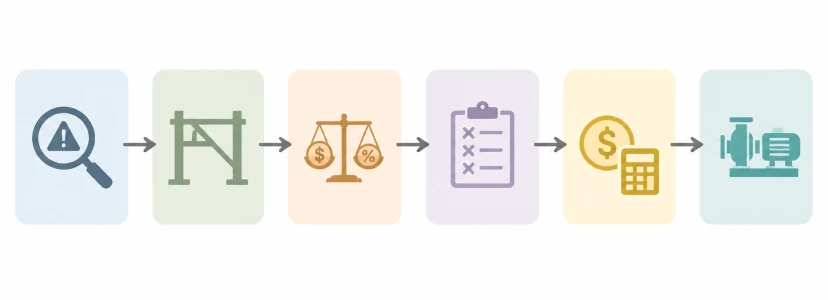
Как принять решение за один день
Вы можете решить большинство вопросов ремонта или замены с помощью короткой, упорядоченной проверки — марафон с электронными таблицами не требуется:
● Сначала диагностика. Подтвердите, что сломалось и почему, чтобы вы не заменили насос из-за неисправности контроллера или не восстановили насос, который не подходит для этой работы.
● Проверьте структуру. Осмотрите корпус и вал. Трещины, глубокая коррозия или задиры подталкивают вас к замене независимо от соотношения затрат.
● Сравните цену восстановления с новой установкой. Если цена значительно ниже половины при исправном корпусе, ремонт обычно выигрывает; на уровне половины или выше стоит внимательнее рассмотреть замену.
● Подсчитайте недавние поломки. Две или три за пару лет — это более сильный сигнал к замене, чем любое единичное соотношение затрат.
● Учитывайте эксплуатационные расходы и время простоя. Добавьте энергию, которую тратит впустую изношенный насос, и стоимость часов простоя, а затем сравните две цифры за весь срок службы, а не два счета.
● Спросите себя, правильный ли это насос. Если он постоянно ломается по одной и той же причине, ответом не является ни восстановление, ни замена на аналогичный — вам нужен насос, подходящий для этой задачи.
Получите оценку ремонта или замены для вашего насоса
Сообщите нам, какой у вас насос, что сломалось, как часто происходили поломки и какую задачу он выполняет, и мы дадим вам прямой ответ о том, что выгоднее: восстановление или замена — и, если насос постоянно ломается по какой-то причине, какой насос действительно решит эту проблему. Варианты из нашего ассортимента можно найти в линейке объемных насосов.
Свяжитесь с нашей командой: Связаться с Aulank | WhatsApp: +86 13773157367 | Электронная почта: info@aulankpump.com