




Food Industry Pump Solutions for Hygienic Processing
Aulank provides the food and beverage industry with professional delivery solutions for liquids, semi-solids, and solids-containing fluids. These solutions strictly adhere to international hygiene standards and regulations such as FDA (21 CFR), EHEDG, and 3-A, and support efficient in-situ cleaning (CIP) and in-situ sterilization (SIP) processes on production lines.

Typical Food Industry Applications
Food industry pump applications range from raw material transfer to the precise dosing of flavorings and additives. Common scenarios include the transfer of viscous products like syrups and pastes, and the gentle handling of shear-sensitive mixtures. These applications demand pumps that not only deliver stable flow but also prevent bacterial growth, cross-contamination, and damage to the food structure (such as fruit chunks or dairy emulsions).
Key Challenges in Food Pump Systems
The primary challenges in food processing involve balancing hygiene compliance with operational efficiency, especially when handling complex media. High viscosity, solids content, and shear sensitivity pose risks of clogging, product degradation, or pump failure. Furthermore, inadequate hygienic design can lead to residue buildup, compromising food safety and leading to costly batch rejections.
Pump Types Suitable for Food Industry Applications
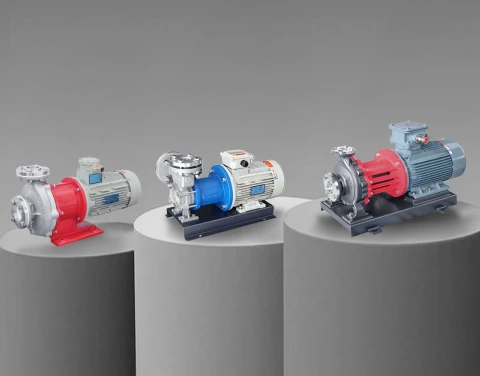
Depending on the media characteristics and process stage, suitable pump types typically include Positive Displacement Pumps and Centrifugal Pumps.
- Positive Displacement Pumps: These are essential for handling high-viscosity fluids and solids gently, ensuring consistent flow without damaging the product structure.
- Centrifugal Pumps: These are commonly used for low-viscosity transfer applications, such as water or thin juices, and are efficiently used for driving CIP return systems.

Key Selection Considerations for Food Industry Pumps
To ensure safety and efficiency, engineers must evaluate several critical factors during the selection process.
- Hygiene & Certifications: Ensure materials (SS316L, food-grade elastomers) and surface finish (Ra < 0.8µm) comply with FDA/EHEDG standards to prevent contamination.
- Media Characteristics: Evaluate viscosity, abrasiveness, shear sensitivity, and solids size to select the appropriate pumping principle and speed.
- Sealing Integrity: Select mechanical seals (single or double) compatible with the product and CIP chemicals to prevent leakage and external contamination.
- Cleanability (CIP/SIP): Verify the pump’s ability to be cleaned and sterilized without disassembly, ensuring no dead zones for bacterial growth.
- Maintenance & Accessibility: Prioritize designs that allow quick disassembly and easy access to wear parts to minimize downtime during maintenance cycles.
Common Issues in Food Pump Operation
Typical issues include seal leakage, product damage (such as foaming or shear thinning), and hygiene failures due to improper cleaning. These problems are often linked to incorrect pump sizing for viscosity, incompatibility with CIP fluids, or neglecting maintenance schedules. A proactive maintenance strategy and correct pump selection are vital for consistent food safety and production efficiency.
Food Industry Pump FAQs
Q1. What is the difference between a standard pump and a sanitary pump?
A sanitary pump is designed with smooth internal surfaces, crevice-free construction, and FDA-approved materials to prevent bacterial accumulation and facilitate cleaning, whereas standard pumps do not prioritize these hygiene features.
Q2. Can one pump handle both thin liquids and viscous pastes?
Certain pumps, like twin screw pumps, can handle a wide range of viscosities, acting as both a process pump for pastes and a CIP pump for cleaning fluids. However, standard centrifugal pumps are generally limited to low-viscosity fluids.
Q3. How often should food pumps be maintained?
Maintenance schedules depend on the abrasiveness of the product and operating hours, but daily visual checks and regular seal inspections are recommended to ensure hygiene compliance.