


High Pressure Chemical Pump Solutions for Process Systems
Aulank provides high pressure chemical pump solutions for process systems used in chemical processing, pharmaceuticals, new energy, thermal management, and related industrial applications.
These solutions are developed based on media characteristics, operating pressure, temperature range, and system configuration. We support pump type selection, parameter matching, material compatibility, and structural configuration, with optional customization and ongoing technical support throughout the operation stage.

Typical High Pressure Chemical Applications
High pressure chemical pump applications are commonly found in continuous chemical transfer, high-pressure circulation systems, metering processes, and sealed chemical handling.
These systems place higher demands on pressure stability, leakage control, material resistance, and long-term operational reliability compared with standard chemical pump applications.
Key Challenges in High Pressure Chemical Pump Systems
High pressure operation amplifies system risks related to leakage, thermal stress, material fatigue, and pressure fluctuation.
Improper pump selection or configuration often leads to seal failure, unstable flow, abnormal temperature rise, or accelerated wear.
A solution-based approach is required to address these challenges at the selection and configuration stage rather than after system commissioning.
Pump Types Suitable for High Pressure Chemical Applications
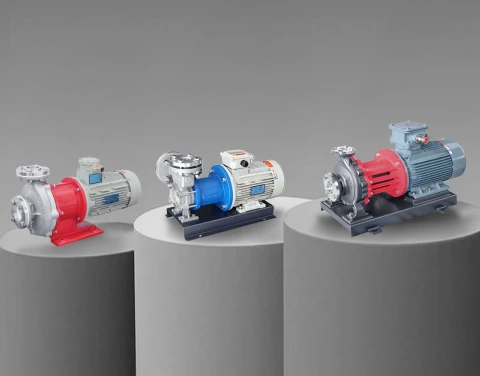
Depending on operating conditions, suitable pump types may include magnetic drive centrifugal pumps, magnetic drive gear pumps, and canned motor pumps.
Magnetic drive and canned designs are commonly applied where leakage control is critical, while gear-type positive displacement pumps are used where stable flow and pressure control are required.
Pump suitability should always be evaluated against actual operating pressure, media properties, and continuous-duty requirements.

Key Selection Considerations for High Pressure Chemical Pumps
Operating Pressure Range
Define normal, peak, and transient pressure conditions rather than relying on nominal pressure ratings.
Media Compatibility
Evaluate corrosion behavior, solvent content, solid particles, and temperature-related material performance.
Temperature Conditions
Confirm material limits, thermal expansion effects, and heat dissipation under high-pressure operation.
Sealing Strategy
Select sealing structures based on leakage tolerance, safety requirements, and system auxiliary conditions.
System Integration
Verify inlet conditions, piping stress, installation space, and protection logic before finalizing selection.
Common Issues in High Pressure Chemical Pump Operation
Typical issues include leakage, unstable pressure, cavitation, abnormal noise, and accelerated wear.
These problems are often linked to operating condition deviation, material mismatch, or insufficient system integration rather than pump quality alone.
Addressing these risks during selection and configuration significantly improves long-term system stability.
Related Pump Product Categories
Explore pump product categories commonly used in high pressure chemical systems:
– Magnetic Drive Centrifugal Pumps
– Magnetic Drive Gear Pumps
– Canned Motor Pumps
High Pressure Chemical Pump FAQs
Q1. How is high pressure defined in chemical pump applications?
High pressure is defined relative to system design pressure, operating fluctuation, and safety requirements rather than a single pressure value.
Q2. Are magnetic drive pumps suitable for high pressure chemical systems?
Yes, when properly selected and configured within defined pressure and temperature limits.
Q3. When should customized solutions be considered?
When standard pump configurations cannot fully meet pressure, media, temperature, or installation constraints.