



High Viscosity Pump Solutions for Thick & Complex Fluids
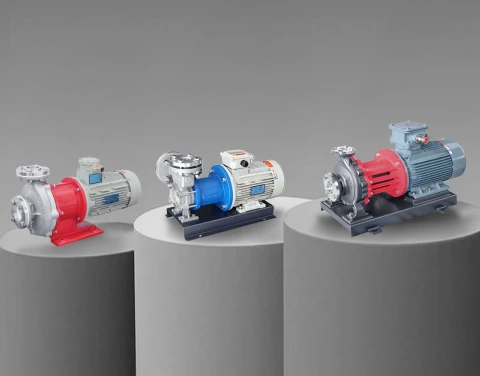
Aulank offers solutions for high-viscosity liquid transfer pumps. Fluids such as paints, syrups, coatings, chemical resins, and emulsions possess poor flow characteristics and high internal resistance. Our solutions utilize positive displacement technology to ensure stable, non-pulsating flow, preventing issues like shear thinning, product degradation, or flow stagnation common in standard centrifugal applications.

Working Principle & Pump Types
Positive Displacement Principle
Unlike centrifugal pumps that rely on velocity, high viscosity pumps operate on the positive displacement (PD) principle. They trap a fixed amount of fluid in a cavity and mechanically force it through the discharge. Crucially, their efficiency often improves as viscosity increases, as the thick fluid seals internal clearances.
Pump Types for Viscous Fluids
- Gear Pumps (Internal/External): Ideal for clean, viscous fluids like oils, resins, and polymers. They offer precise metering and high pressure.
- Rotary Lobe Pumps: Suitable for sanitary applications (food/pharma) and fluids containing soft solids. They provide gentle handling with low shear.
- Screw Pumps: Excellent for extremely high viscosity fluids (like pastes) and varying flow rates with minimal pulsation.
Key Characteristics of High Viscosity Pumps
- Fluid Adaptability: Capable of handling a wide range of viscosities, from motor oil to heavy pastes.
- High Efficiency & Stability: Volumetric efficiency remains high even under varying back pressures; flow is directly proportional to speed, offering stable output.
- Adjustability: Flow rate can be easily and precisely controlled by adjusting the motor speed via a VFD.
- Durability: Designed with robust shafts and bearings to withstand the high torque and shear forces required to move heavy, sticky fluids.
Typical High Viscosity Applications
- Pharmaceutical Industry: Transferring ointments, heavy syrups, creams, and gelatine with strict hygiene and dosing accuracy.
- Chemical Processing: Handling adhesives, glues, polymer melts, isocyanates, and viscous solvents in reactor feeding or filling lines.
- Cosmetics Industry: Pumping lotions, shampoos, toothpastes, and gels without altering their texture or introducing air bubbles.
- Food Industry: Conveying honey, chocolate, peanut butter, molasses, and dough, requiring food-grade materials and CIP capability.

Key Selection Considerations for High Viscosity Pumps
- Fluid Viscosity: Viscosity determines the pump speed. As viscosity increases, pump speed must be reduced to allow the fluid to fill the cavity and prevent cavitation.
- Temperature & Pressure Requirements: Viscosity is highly temperature-dependent. Ensure the system maintains the fluid temperature (e.g., using jacketed pumps) to keep it pumpable. Check pressure ratings for high-resistance lines.
- Pump Materials: Select materials compatible with the chemical nature of the fluid. For abrasive viscous fluids (like filled resins), hardened gears or coated screws are necessary.
- Flow Rate & Efficiency: Calculate the required slip correction. Unlike water pumps, viscous pumps perform better at lower speeds but require higher torque motors.
- Maintenance & Serviceability: Viscous fluids can cure or solidify when stopped. Choose pumps that are easy to disassemble for cleaning or feature built-in heating jackets to prevent seizing.
Common Issues in High Viscosity Pump Operation
- Cavitation: Caused by running the pump too fast for the thick fluid to enter. Result: loud noise and flow drop.
- Motor Overload: Viscosity higher than expected (e.g., due to temperature drop) requires more torque, tripping the motor.
- Sealing Failure: Sticky fluids can dry on seal faces. Use double seals with barrier fluid for difficult media.
FAQs
Q1. Can I use a centrifugal pump for high viscosity fluids?
Generally not recommended for viscosities over 500-1000 cPs. Efficiency drops drastically, and power consumption spikes. Positive displacement pumps are far more efficient.
Q2. How does temperature affect pumping high viscosity liquids?
Temperature drop causes viscosity to spike, potentially seizing the pump. We recommend jacketed pumps (heated) for fluids like chocolate, asphalt, or heavy oil.
Q3. What happens if I run a gear pump dry?
Gear pumps rely on the pumped fluid for lubrication. Running dry will cause rapid wear and seizing. Dry-run protection is essential.