
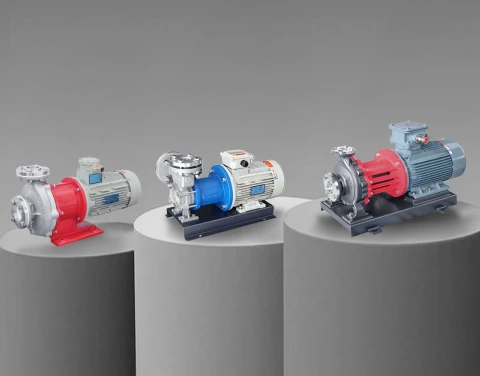



In industrial fluid transfer, HVAC circulation, and residential water supply systems, the canned motor pump has earned its reputation as the "silent heart" of critical operations. This hermetically sealed pump technology delivers zero leakage, whisper-quiet operation, and maintenance-free performance that traditional mechanical seal pumps simply cannot match.
As you evaluate canned motor pump options from different manufacturers, you will notice significant variations in core structure, material selection, and performance priorities. These differences are not random—they represent three distinct technical approaches, each optimized for specific application requirements. Understanding these design philosophies helps engineers and procurement specialists select the right sealless pump technology for their unique operational demands.
This comprehensive guide examines the three main canned motor pump design routes: modular monitoring systems built for industrial reliability, residential sealing configurations focused on cleanliness and quiet operation, and flexible configuration platforms that balance performance with cost efficiency.
What Is a Canned Motor Pump and How Does It Work?
A canned motor pump integrates a centrifugal pump hydraulic section with a specially designed squirrel cage motor into a single hermetically sealed unit. Unlike conventional pumps that require mechanical seals or packing glands to prevent shaft leakage, the canned pump design eliminates this failure point entirely by enclosing the motor rotor within a thin-walled containment shell—commonly called the "can" or stator liner.
The working principle relies on fluid circulation through the rotor chamber. Process liquid enters through the pump suction, passes through the impeller, and a portion circulates through the motor section. This internal circulation path serves dual purposes: it cools the motor windings and lubricates the sleeve bearings that support the rotating assembly. The stator windings remain isolated from the pumped liquid by the containment shell, while the rotor operates in a "wet" environment surrounded by process fluid.
This sealless pump construction provides what engineers call "double containment" or "secondary containment." If the primary stator liner fails, the outer motor housing acts as a backup pressure boundary, preventing any external leakage. This double seal barrier makes hermetic pumps the preferred choice for handling hazardous chemicals, toxic fluids, radioactive liquids, and expensive process media where any leakage creates safety hazards or economic losses.
The elimination of mechanical seals delivers several operational advantages. Leak-free pump operation eliminates fugitive emissions monitoring requirements. Zero-leakage performance removes environmental contamination risks. The absence of seal faces, springs, and elastomers that wear over time dramatically extends mean time between repairs (MTBR). Without external bearings, coupling guards, or lubrication systems, the compact pump footprint reduces installation space requirements while eliminating alignment procedures.

The Three Technical Approaches to Canned Motor Pump Design
Manufacturers worldwide have developed distinct design philosophies for canned motor pumps, each addressing different market segments and application priorities. While all share the fundamental sealless centrifugal pump architecture, their structural details, material choices, and feature sets diverge significantly.
These three technical routes can be characterized as:
- Modular Monitoring Type — Prioritizing industrial reliability through condition monitoring and predictive maintenance capabilities
- Residential Sealing Type — Focusing on absolute cleanliness, silent operation, and contamination-free fluid handling
- Flexible Configuration Type — Offering customizable component options to optimize the performance-to-cost ratio
Each approach represents a coherent design philosophy rather than random feature selection. Understanding the logic behind these technical routes helps buyers match pump capabilities to application requirements.

Modular Monitoring Type: Built for Industrial Reliability
The modular monitoring approach places operational visibility and system reliability at the forefront of the design philosophy. These industrial canned motor pumps are engineered for continuous-duty applications where unplanned downtime carries severe consequences.
Structural Core Design
The pump body structure maintains clear component boundaries with independently identifiable assemblies. This modular construction simplifies maintenance procedures and allows targeted component replacement without complete pump disassembly.
The signature feature of this design route is integrated bearing condition monitoring instrumentation. Sensors track radial bearing wear, axial shaft position, motor winding temperature, and vibration levels in real time. This continuous health monitoring enables predictive maintenance strategies—maintenance teams can schedule bearing replacements based on actual wear measurements rather than arbitrary calendar intervals.
Advanced monitoring packages may include:
- Bearing radial wear monitors that measure sleeve bearing clearance changes over time
- Axial position indicators that detect thrust bearing degradation
- Motor thermal protection sensors in the stator windings
- Vibration monitors for detecting mechanical imbalance or cavitation
- Power monitors that flag abnormal current draw indicating blocked impellers or process upsets
This instrumentation transforms the shielded pump from a passive component into an active participant in plant reliability programs. Operators gain visibility into pump health without invasive inspections, and maintenance can be scheduled during planned outages rather than responding to emergency failures.
Materials and Market Positioning
Modular monitoring designs typically specify premium materials throughout. Wetted components use 316 stainless steel or higher alloys for broad chemical compatibility. Containment shells may employ Hastelloy C276 for superior corrosion resistance in aggressive chemical services. Bearings are commonly silicon carbide for maximum wear life in clean services, with carbon graphite options available for fluids containing particulates.
This technical approach positions itself clearly in the market: high reliability, continuous monitoring, predictive maintenance capability. It serves industrial users who prioritize long-term operational stability and risk management over initial purchase price. Typical applications include chemical processing plants, petrochemical facilities, pharmaceutical manufacturing, and nuclear installations where pump failure consequences are severe.
The value proposition centers on total cost of ownership rather than acquisition cost. Higher upfront investment delivers lower lifecycle costs through extended service intervals, reduced unplanned downtime, and simplified maintenance procedures.

Residential Sealing Type: Focused on Quiet and Clean Operation
The residential sealing approach optimizes for specific demands common in building services and commercial applications: absolute leak prevention, ultra-low noise emission, and zero contamination risk.
Structural Core Design
These canned pumps employ highly integrated, compact construction with all components assembled into a unified package. The design minimizes joint surfaces and potential leak paths through careful attention to housing geometry and sealing interfaces.
The technical essence of this approach lies in multi-layer proprietary seal ring systems. These specialized sealing arrangements physically isolate lubrication fluids from the pumped medium, achieving a completely "clean" pump chamber. This design simultaneously addresses two concerns: preventing process contamination by bearing lubricants, and eliminating static electricity buildup that could create ignition risks in sensitive applications.
Unlike designs where bearing lubricant mixes with process fluid, the residential sealing configuration maintains strict separation. This matters greatly in potable water systems, pharmaceutical processes, food and beverage applications, and semiconductor manufacturing where any contamination is unacceptable.
Acoustic performance receives equal priority. The hermetically sealed motor eliminates cooling fan noise. Precision-balanced rotating assemblies minimize vibration transmission. Soft-mounted installations further reduce structure-borne sound. The result is near-silent operation suitable for installation in occupied spaces.
Materials and Market Positioning
Material selection emphasizes wear resistance and acoustic damping. Ceramic bearings are common choices, offering excellent wear characteristics with minimal friction noise. Bearing surfaces may receive specialized coatings to further reduce operating sound levels.
Every design decision circles back to three priorities: quiet operation, clean fluid handling, and maintenance-free service. This makes the residential sealing configuration the classic solution for building water supply, HVAC circulation systems, water purification equipment, and similar applications where the pump operates near people.
The market positioning emphasizes zero contamination, silent running, and static electricity protection. These characteristics make this design the benchmark for residential, commercial, and institutional applications where user comfort and fluid purity take precedence over raw performance specifications.

Flexible Configuration Type: Balancing Performance and Cost
The flexible configuration approach embodies a different design philosophy—strategic adaptability that covers broader market needs through selectable component options.
Structural Core Design
The primary innovation in this technical route involves containment shell manufacturing processes with two distinct options:
Machined Containment Shell Configuration
- Precision-machined stator liner from solid material
- Combined with seal-functional end covers
- Delivers maximum reliability for demanding services
- Higher manufacturing cost but superior dimensional control
Stamped Containment Shell Configuration
- Single-operation press-formed stator liner
- Lower manufacturing cost
- Supplemented by external seal rings to achieve performance targets
- Suitable for less demanding applications where cost sensitivity is higher
This dual-track manufacturing strategy allows the same basic pump design to serve both premium reliability requirements and price-sensitive applications. Customers select the configuration that matches their specific performance-to-budget requirements.
Materials and Market Positioning
Material flexibility extends throughout the rotating assembly. Bearing options include both silicon carbide for maximum wear life and carbon graphite for applications with particulates or upset conditions. Shaft material is typically 17-4PH precipitation-hardening stainless steel with optional coating treatments for enhanced corrosion or wear resistance. Transition rings (thrust surfaces) are available in hardened alloy or silicon carbide depending on service requirements.
This modular material approach enables precise customization. A chemical plant might specify silicon carbide bearings with coated shafts for aggressive service, while a less demanding application might use carbon bearings with standard shaft material at lower cost.
The market positioning emphasizes configuration flexibility, broad application coverage, and optimized cost-performance ratio. This approach serves users with clear performance budgets who need precise customization rather than one-size-fits-all solutions.

Comparing Circulation Flow Paths in Canned Motor Pumps
Beyond the three design philosophies described above, canned motor pumps also differ in internal circulation arrangements. The circulation path determines how process fluid flows through the motor section for cooling and bearing lubrication.
| Circulation Type | Flow Direction | Best Applications | Key Characteristics |
|---|---|---|---|
| Basic Internal Circulation | Impeller → Rotor chamber → Hollow shaft → Suction | General services, moderate temperatures | Simple design, reliable operation |
| Standard Circulation | Impeller → External line → Rotor chamber → Return | Higher temperature services | External cooler integration possible |
| Reverse Circulation | Impeller → FB housing → Rotor chamber → Return to tank vapor space | Liquefied gases, high vapor pressure fluids | Prevents cavitation in motor section |
| Self-Priming | Includes priming chamber | Underground tanks, entrained gas services | Handles air-bound suction conditions |
| High Temperature | Thermal barrier between pump and motor | Hot oil, heat transfer fluid | Motor thermally isolated from process |
The reverse circulation canned pump deserves special mention for volatile liquid handling. In this design, circulation fluid exits through piping that returns to the vapor space of the suction tank rather than the pump suction. This prevents vaporization and gas accumulation within the motor section when pumping saturated liquefied gases like ammonia, propane, or refrigerants.
High temperature canned motor pump designs employ thermal barriers—constricted adapter sections that reduce heat transfer from the hot pump end to the motor. An auxiliary impeller on the motor shaft drives separate cooling circulation through an external heat exchanger, keeping motor temperatures within acceptable limits even when pumping fluids above 400°C (750°F).
Selecting the Right Canned Motor Pump for Your Application
Choosing between the three technical approaches requires matching design characteristics to application requirements. Consider these selection criteria:
Choose Modular Monitoring Type when:
- Continuous operation is critical to process economics
- Predictive maintenance programs are in place
- Remote monitoring or integration with plant DCS/PLC is required
- Handling hazardous chemicals where early failure warning is essential
- Long service life justifies higher initial investment
Choose Residential Sealing Type when:
- Fluid purity is paramount (potable water, pharmaceutical, food)
- Installation is in noise-sensitive locations
- Static electricity must be prevented
- Compact, maintenance-free operation is desired
- Aesthetic considerations matter (visible installations)
Choose Flexible Configuration Type when:
- Performance requirements are well-defined
- Budget constraints require optimization
- Application conditions vary across the installed base
- Spare parts standardization is important
- Multiple performance tiers are needed across a project
Application Decision Matrix
| Application | Recommended Approach | Key Considerations |
|---|---|---|
| Chemical processing | Modular Monitoring | Hazardous fluids, reliability critical |
| Petrochemical plants | Modular Monitoring | High temperatures, condition monitoring |
| Building HVAC | Residential Sealing | Low noise, clean operation |
| Potable water supply | Residential Sealing | Zero contamination requirement |
| Pharmaceutical | Residential Sealing | Ultra-clean, validatable |
| Semiconductor | Flexible Configuration | Clean + cost optimization |
| General industrial | Flexible Configuration | Balance performance and budget |
| OEM equipment | Flexible Configuration | Volume pricing, customization |
Industry Applications for Canned Motor Pump Technology
The three design approaches serve distinct industry segments, though overlap exists where application requirements cross traditional boundaries.
Chemical and Petrochemical Industries
Chemical process plants rely heavily on canned motor pumps for transferring hazardous, toxic, or flammable fluids. The zero-leakage guarantee eliminates fugitive emissions that trigger regulatory reporting requirements. Double containment protects personnel and environment even if primary containment fails.
Typical services include reactor feed and circulation, solvent transfer, catalyst handling, and intermediate chemical movement. The modular monitoring approach dominates this sector, with condition monitoring enabling predictive maintenance in continuous process operations.
Building Services and HVAC
Heating, ventilation, and air conditioning systems specify canned pumps for hot water circulation, chilled water distribution, and condenser loops. The residential sealing approach delivers the quiet operation essential for occupied buildings, while leak-free performance eliminates water damage risks from mechanical seal failures.
Building water supply systems—both potable distribution and pressure boosting—increasingly adopt hermetic pump technology. The absence of lubricant contact with potable water satisfies health and safety requirements without additional treatment or filtration.
Semiconductor Manufacturing
Semiconductor fabrication demands extraordinary fluid purity. Ultra-pure water systems, chemical delivery, and process circulation all benefit from contamination-free canned pump technology. The flexible configuration approach allows optimization for specific purity requirements while managing equipment budgets across large fabrication facilities.
Refrigeration and Liquefied Gas
Handling refrigerants, liquefied petroleum gases, and cryogenic fluids requires reverse circulation designs that prevent motor section vaporization. Canned motor pumps have become the global preference for liquid overfeed refrigeration systems where traditional seal technologies cannot maintain integrity against low-temperature, high-vapor-pressure fluids.

Maintenance Considerations for Sealless Pump Technology
While canned motor pumps are often described as "maintenance-free," this characterization requires qualification. The elimination of mechanical seals removes the most frequent maintenance item in conventional pumps, but bearings and other wear components still require eventual attention.
Bearing life depends heavily on operating conditions. Clean fluids with adequate lubricity extend bearing service dramatically—10 to 15 years is common, with some installations reporting 20 to 30 year bearing life in favorable services. Fluids with particulates, marginal lubricity, or upset conditions reduce bearing life proportionally.
The modular monitoring approach directly addresses bearing wear tracking. Radial wear monitors detect increasing bearing clearance before it affects pump performance or risks internal contact. This enables scheduled bearing replacement during planned outages rather than responding to failures.
For residential sealing and flexible configuration designs without integrated monitoring, periodic vibration analysis provides bearing condition assessment. Increasing vibration amplitude or changing vibration signatures indicate bearing degradation requiring maintenance planning.
Containment shell inspection is another maintenance consideration. While rare, shell damage can occur from internal wear, corrosion, or thermal cycling. Non-destructive examination techniques including eddy current testing can detect shell thinning before it progresses to failure.

Conclusion: Finding the Right Technical Approach
The three canned motor pump design philosophies each serve legitimate market needs:
The Modular Monitoring Type stands as the guardian of industrial process safety—delivering continuous visibility into pump health for operations that cannot tolerate unplanned downtime.
The Residential Sealing Type protects quality of life and fluid purity—providing silent, contamination-free operation for building services and sensitive process applications.
The Flexible Configuration Type responds agilely to market demands—offering precise customization that balances performance specifications against budget constraints.
Understanding the logic behind these design routes helps you find the canned motor pump that truly matches your application requirements. Whether you prioritize predictive maintenance capability, acoustic performance, fluid purity, or cost optimization, one of these technical approaches offers the ideal solution for your "silent heart" pumping needs.
FAQ
What is the difference between a canned motor pump and a magnetic drive pump?
Both are sealless pump technologies, but they differ in how the motor drives the impeller. Canned motor pumps use a wet motor with the rotor operating in process fluid. Magnetic drive pumps use an external motor with magnetic coupling through a containment shell. Canned pumps offer double containment and typically better efficiency, while magnetic drives allow motor servicing without disturbing process containment.
How long do canned motor pump bearings last?
Bearing life varies significantly with operating conditions. In clean services with good fluid lubricity, 10-15 years is typical, with some installations exceeding 20-30 years. Fluids with particulates, poor lubricity, or frequent upset conditions reduce bearing life proportionally.
Can canned motor pumps handle high temperature fluids?
Yes, specialized high temperature canned pump designs handle fluids exceeding 400°C (750°F). These use thermal barriers between pump and motor sections, with separate cooling circulation through external heat exchangers to maintain motor temperatures within limits.
What causes canned motor pump failures?
The most common failure modes are bearing wear (from particulates, dry running, or poor lubricity), containment shell damage (from corrosion or thermal cycling), and motor winding failures (from overheating due to lost circulation). Proper application and monitoring prevent most failures.
Are canned motor pumps more efficient than sealed pumps?
Overall system efficiency depends on application conditions. Canned pumps have some motor efficiency loss due to the containment shell in the magnetic air gap, but they eliminate mechanical seal power losses and don't require seal flush systems. In many applications, system efficiency is comparable or better.
