



Liquid nitrogen pumping is one of the few duties in industrial fluid handling that consistently defeats general-purpose centrifugal pumps. At −196 °C, the steel of the pump housing has contracted, the elastomer of any seal has lost its rubber state and shrunk into a brittle plastic, the lubricant in standard bearings has solidified, and the magnet on a room-temperature magnetic coupling has dropped 15–20% of its torque transmission. Asking a generic chemical pump to handle this is not selection — it is a guaranteed failure scheduled for the first cool-down. A cryogenic pump is a different engineering object covered partly in our extreme-temperature pump solutions page, and the field has only a handful of structural solutions that actually survive years of service at LN₂ temperatures.
We have manufactured the AYDH cryogenic magnetic drive pump series for more than a decade, supplying it into pharmaceutical lyophilization (freeze-drying) plants, semiconductor cryogenic process tools, scientific research laboratories with superconducting equipment, VOC (volatile organic compound) recovery facilities, biological sample storage systems, and LNG dispensing stations. This guide is a technical deep-dive on what makes liquid nitrogen pumping different, why magnetic-drive architecture is mandatory at cryogenic temperatures, and how to specify a pump that will actually run for the lifetime of the equipment it serves.
1. Liquid Nitrogen at −196 °C: A Fluid Engineering Profile
Liquid nitrogen has unusual properties for an industrial fluid, and understanding them is the precondition for sensible pump selection:
● Boiling point: 77.4 K (−195.8 °C) at atmospheric pressure.
● Density: 808 kg/m³ at boiling point — about 80% of water density.
● Viscosity: 0.16 mPa·s at 77 K — roughly one-sixth the viscosity of water at room temperature. Very low pumping resistance, but also very low boundary lubrication.
● Vapor pressure: atmospheric at 77.4 K, rising to ~3.4 bar at 90 K and 10 bar at 105 K. NPSH margin is the dominant design constraint — even small temperature rises in the suction line cause vapor flashing.
● Liquid-to-gas expansion ratio: 1:696. Any LN₂ that warms and vaporizes inside a closed pump housing generates pressure faster than relief valves can compensate. A failed pump with trapped LN₂ is genuinely dangerous.
● Surface tension: extremely low. LN₂ wets and creeps through any aperture, including microscopic seal gaps that contain water at room temperature.
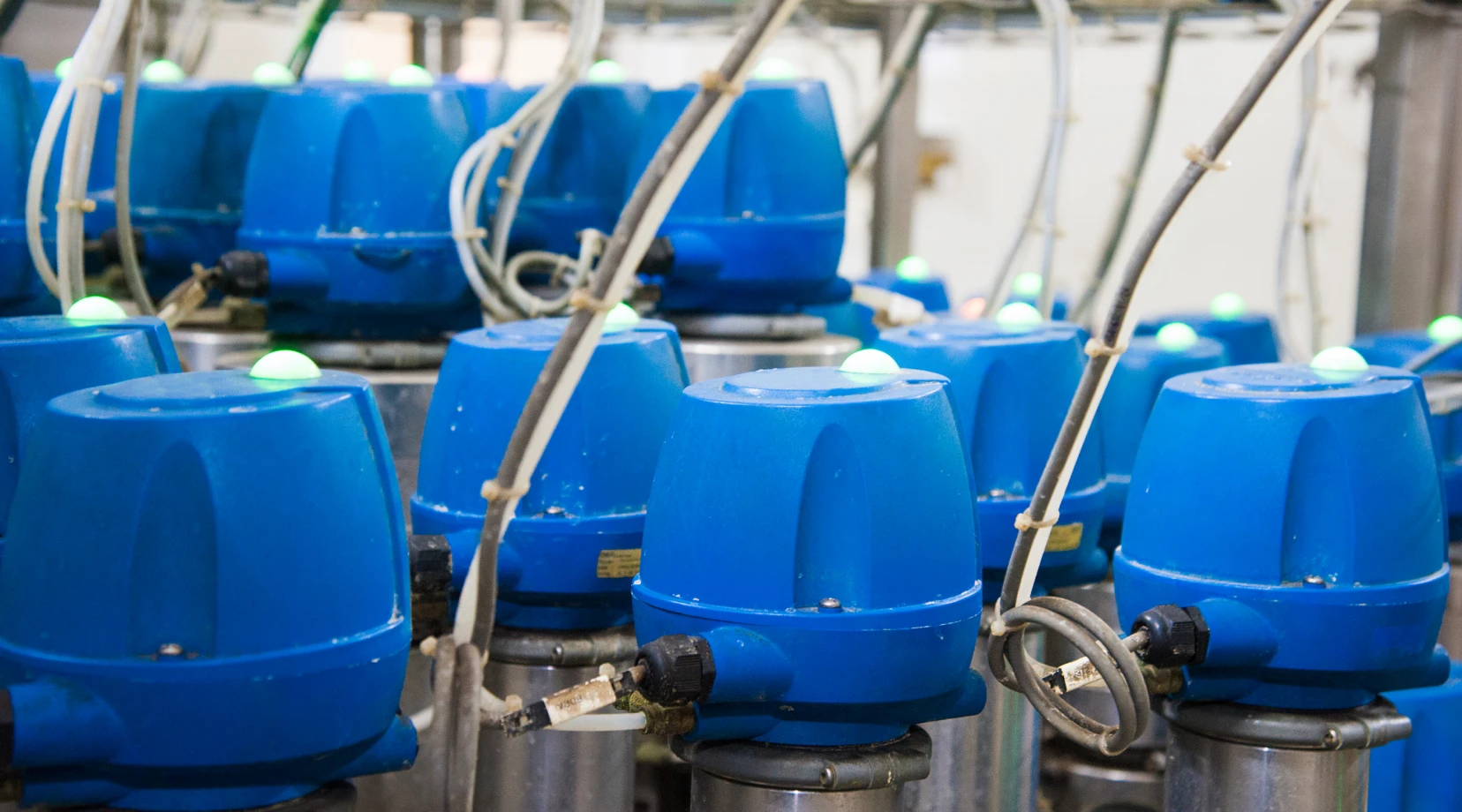
Three engineering consequences flow from this profile. First, the pump must tolerate a rapid 220+ °C temperature swing during cool-down without component failure. Second, NPSH-A (available NPSH) is always limited; any pump architecture that requires significant suction-side pressure to avoid cavitation is unsuitable. Third, the pump must operate without dynamic seal leakage because the fluid escapes through paths that liquid water could not penetrate.
2. Why Mechanical-Seal Pumps Fail in Cryogenic Service
Mechanical seals were never designed for cryogenic operation. The standard failure modes when they are forced into LN₂ duty are predictable enough to enumerate:
● Elastomer secondary seal embrittlement. Buna-N, EPDM, FKM, and most fluoroelastomers transition through their glass-transition temperature somewhere between −30 and −60 °C. At LN₂ temperature they are rigid, shrunken plastics. The static and dynamic sealing function disappears within the first cool-down cycle.
● Seal-face thermal shock. A typical silicon carbide / carbon graphite seal face pair has different coefficients of thermal expansion (CTE). Cooling from 20 °C to −196 °C contracts the materials at different rates and the resulting differential strain causes face cracking within minutes.
● Lubrication failure at the seal interface. Mechanical seals rely on a microscopic fluid film between the rotating and stationary faces. LN₂ has very low viscosity and almost no boundary lubrication. The film does not form, the faces touch metal-on-metal, frictional heat vaporizes the LN₂ immediately, and the seal runs dry within seconds.
● Ice formation on the atmospheric side. Even with a perfect seal, the radiated cold causes atmospheric moisture to condense and freeze on the pump shaft and seal area. The ice builds up, interferes with seal motion, and eventually forces dry contact between the moving and static parts. This is one of the most common real-world failure modes in poorly-engineered cryogenic pump installations.
The cumulative result is that a mechanical-seal centrifugal pump pressed into LN₂ service typically lasts hours to days, not years. The industry-accepted solution is to eliminate the dynamic seal entirely, which means magnetic drive or canned motor architecture.
3. Magnetic Drive Architecture for Liquid Nitrogen Duty
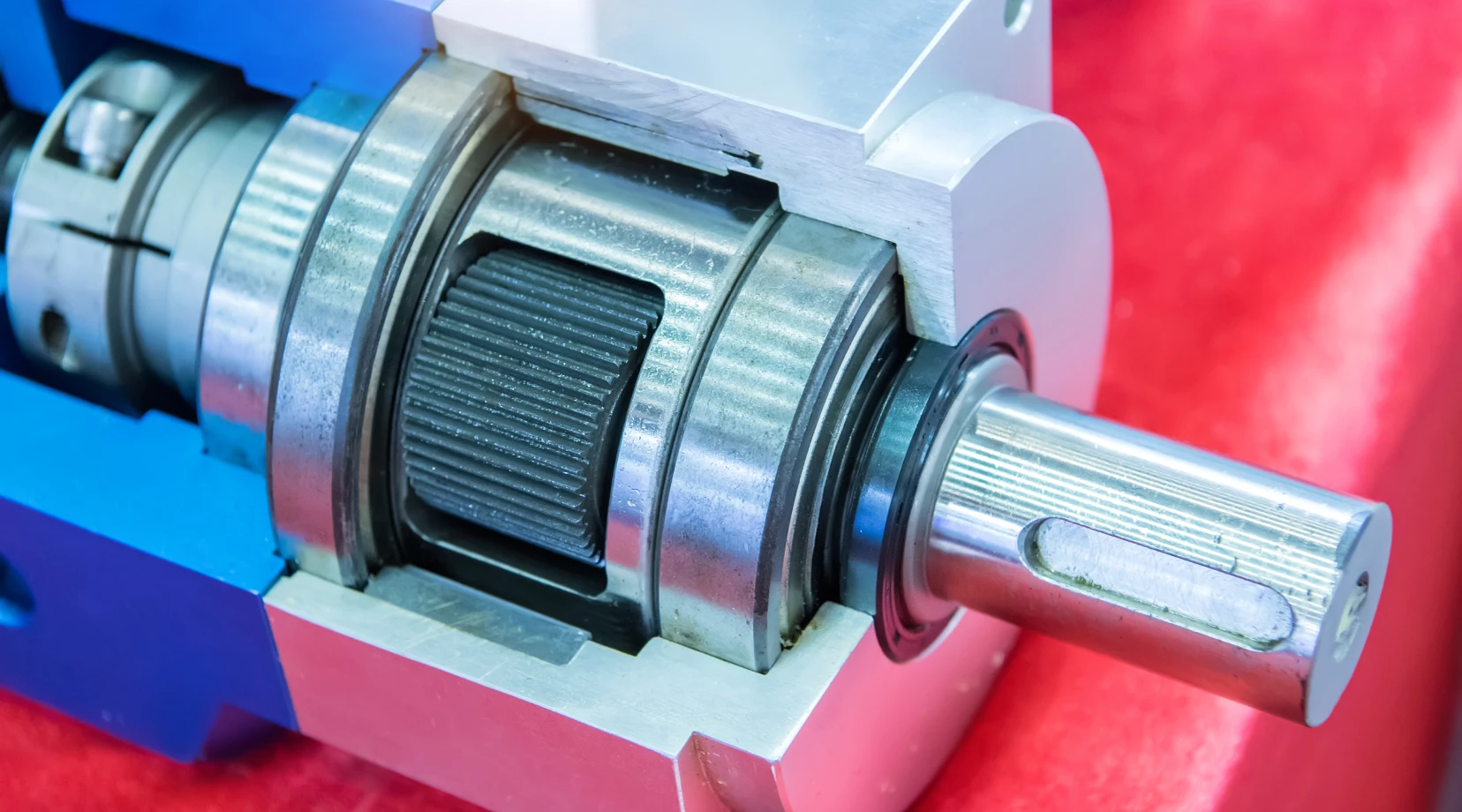
A cryogenic magnetic-drive pump transmits torque from an external motor to an internal impeller through a synchronous magnetic coupling that acts across a static, sealed containment shell. There is no dynamic seal, no rotating shaft penetrating the pump housing, and no atmospheric path for moisture to enter or for LN₂ to escape. This is structurally the right answer for cryogenic duty, but it imposes engineering constraints that distinguish a cryogenic mag-drive pump from a generic chemical mag-drive pump:
● Magnet selection for cryogenic operation. Neodymium-iron-boron (NdFeB) magnets at −196 °C retain most of their magnetic flux but change torque transmission by 10–20% compared to room temperature. Samarium-cobalt (SmCo) magnets perform better at cryogenic temperatures with smaller torque shifts, and they tolerate the temperature cycling better. Both are options; the choice depends on whether the pump sees continuous LN₂ service or cycles between cryogenic and room temperature operation.
● Containment shell material selection. Standard chemical mag-drive pumps use thin stainless steel or Hastelloy containment shells. These work at LN₂ temperature mechanically, but they generate eddy current losses in the rotating magnetic field — and at cryogenic temperature, even a few watts of eddy-current heating measurably affects the LN₂ loop. Our AYDH series uses a non-metallic ceramic isolation shell that eliminates eddy current losses, keeping parasitic heat input to the cryogenic loop near zero.
● Bearing material and clearance. Silicon carbide on silicon carbide bearings are the chemical mag-drive default. At cryogenic temperature, differential thermal contraction shifts the clearance, and SiC’s low boundary-lubrication tolerance becomes a real risk under LN₂’s very low viscosity. The AYDH uses purpose-engineered cryogenic bearings with clearances specified at LN₂ temperature rather than at room temperature, plus deep-cryogenic-treated components throughout the wetted assembly.
● Housing material and deep cryogenic treatment. The pump body and machined parts undergo deep cryogenic treatment as part of manufacturing. This is a heat treatment that cycles the material to −196 °C and back, which relieves residual stresses, stabilizes the austenite-martensite phase balance in the stainless, and improves low-temperature toughness. Pumps without this treatment can crack on the first field cool-down even if the metallurgy is nominally compatible.
For deeper background on magnetic drive pump engineering, see our industrial magnetic drive pump selection guide, which covers magnet coupling theory and the broader architecture choices in detail. The canned motor pump technology guide explains why canned-motor variants are usually not preferred at cryogenic temperatures — the motor rotor running inside the process fluid creates excessive heat input to the LN₂ loop.
4. The AYDH Pump: Internal Structure and Design Choices
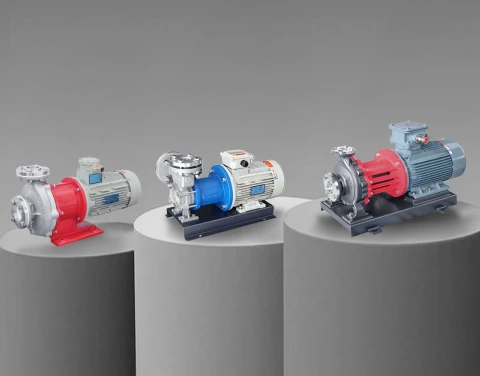
Our AYDH magnetic liquid nitrogen pump is a regenerative-turbine (vortex) magnetic-drive pump purpose-built for cryogenic fluid handling. Its structural elements:
● Pump cover — cryogenically-treated stainless steel with vacuum-jacketed insulation provisions.
● Regenerative impeller — vortex (peripheral-vane) geometry, covered in detail in our industrial vortex pump selection guide, that delivers high head at low flow with minimal pulsation. Suited to the low-flow, moderate-head profile of most cryogenic applications.
● Pump body — deep-cryogenic-treated 316L stainless, machined with clearances specified at operating temperature.
● Axle sleeve and inner magnet assembly — SmCo magnet stack for stable torque transmission across the 220 °C temperature cycle.
● Ceramic isolation cover — non-metallic containment shell that eliminates eddy current losses and minimizes parasitic heat into the cryogenic loop.
● Outer magnet and motor support — thermally isolated from the cryogenic pump body to keep motor bearings at room temperature.
● Motor — standard or synchronous permanent-magnet, sized with 25–30% torque margin to handle cold-start and viscosity transients.
Performance envelope (water-equivalent reference at 20 °C, ±10% variation by service fluid):
| Parameter | Specification |
| Operating temperature range | −196 °C to ambient |
| Maximum working pressure | 5 MPa (50 bar) |
| Service fluids | LN₂, LO₂, LAr, LNG (with explosion-proof variant), liquid ammonia |
| Drive | Synchronous permanent magnet (SmCo or NdFeB cryogenic-rated) |
| Containment shell | Ceramic (zero eddy current loss) |
| Wetted parts | Deep-cryogenic-treated 316L stainless |
| Sealing | Static O-ring on housing, no dynamic seal |
| Bearing system | Cryogenic-rated, fluid-lubricated |
5. Lyophilization (Freeze Drying): The Largest Application Vertical
Pharmaceutical and biotech lyophilization — freeze drying — has been one of the fastest-growing markets for cryogenic pumps over the past decade, driven by the expansion in biologics manufacturing and mRNA vaccine production capacity. Liquid nitrogen plays two roles in a lyophilizer:
Shelf cooling on the freeze-dryer
The shelves on which product vials sit must be cooled from room temperature to −50 °C or −70 °C at controlled rates — typically 1 °C per minute. Compressor-based mechanical refrigeration cannot maintain that rate consistently as temperature drops; cryogenic systems using LN₂ or cold gaseous nitrogen (GN₂) deliver near-linear cool-down rates through the entire range. A circulation pump in this loop moves LN₂ or chilled heat-transfer fluid through the shelf channels.
Condenser cooling
After sublimation, the water vapor from the product must be captured on a condenser plate held below −60 °C. LN₂ circulation through the condenser provides constant cooling power independent of the sublimation rate, which compressor-based systems struggle to match. Pump duty here is continuous through the entire lyo cycle.
Pharmaceutical-grade requirements for these pumps go beyond cryogenic compatibility:
● Zero contamination of the LN₂ or heat-transfer fluid (no metal-ion shedding from internals).
● Sanitary connections and surface finish suitable for cleanroom-adjacent installation.
● Material traceability for GMP documentation.
● Documented service interval data for FDA inspection readiness.
For broader background on pumps in temperature-controlled pharmaceutical applications, the engineering logic shares a great deal with our mold temperature controller pump selection guide — both are about precision thermal control where the pump is the critical reliability component.
6. Semiconductor Cryogenic Process Tools and Sample Preparation
Advanced semiconductor processes increasingly require cryogenic temperatures. Cryogenic etching at −80 to −110 °C improves selectivity in high-aspect-ratio features critical for 3D NAND and advanced logic. Cold sample preparation in failure analysis labs requires −150 to −196 °C handling. EUV mask inspection benefits from cryogenically-stabilized optical components.
LN₂ pumps appear in these tools in three configurations:
● Direct LN₂ circulation to chuck cooling. A small mag-drive LN₂ pump circulates liquid nitrogen from a phase-separator dewar through the wafer chuck and back. Tight flow accuracy and low pulsation matter because chuck temperature stability directly drives etch selectivity.
● LN₂ pre-cooling of fluorinated heat-transfer fluid. Galden PFPE coolant is pre-cooled by an LN₂ heat exchanger to reach −70 to −100 °C, then circulated through the tool. The LN₂ loop on the cold side of the heat exchanger uses a small mag-drive pump for circulation, and the PFPE loop uses a standard magnetic-drive vortex pump as covered in our semiconductor coolant pump selection guide.
● Sample storage and transfer. Cryogenic biological sample storage (vaccine repositories, cell banking, biorepositories) requires continuous LN₂ circulation to maintain storage tank levels and to transfer samples between dewars. Pump reliability here is patient-safety-relevant; planned maintenance windows are short and unannounced failures are unacceptable.
7. VOC Recovery and LNG Dispensing: Industrial Cryogenic Applications
Two industrial duties drive significant LN₂ pump volume outside of pharma and semiconductor:
VOC condensation recovery
High-concentration volatile organic compound waste gas streams (from petrochemical loading, paint and coating manufacturing, pharmaceutical solvent recovery) can be recovered as liquid by cryogenic condensation. LN₂ or cold nitrogen gas chills a condensation column to −60 to −100 °C, the VOCs liquefy, and the recovered liquid is pumped back to storage. This is environmentally and economically meaningful: a well-designed VOC recovery unit captures 95%+ of the VOC mass, reducing both emissions and feedstock loss.
Pump duty in VOC recovery is continuous, the recovered liquid may contain trace water and particulates, and the cold side runs near LN₂ temperatures. Mag-drive architecture is mandatory because the recovered VOCs are usually flammable, often toxic, and always regulated.
LNG dispensing and small-scale transfer
Liquefied natural gas dispensing — whether at fleet refueling stations, marine bunkering small-scale operations, or industrial LNG storage — uses cryogenic pumps similar in specification to LN₂ pumps. LNG boils at −162 °C, slightly warmer than LN₂ but in the same engineering regime. The AYDH series handles LNG with explosion-proof motor configuration; the wetted-parts design is identical to LN₂ service because LNG is similarly thin, low-surface-tension, and intolerant of seal leakage (it is also flammable at any concentration in air).
8. Installation and Operating Practice for Cryogenic Pumps
A correctly-specified cryogenic pump can still fail in service if the installation and operating procedure are wrong. Five practical issues we see in field service:
● Suction-line insulation. Vacuum-jacketed piping on the pump suction is essentially mandatory. Single-wall foam-insulated pipe lets enough heat in to cause vapor flashing and severe NPSH degradation. The economics here are stark: the cost difference between vacuum-jacketed and foam-insulated suction piping is recovered in a few months of avoided pump cavitation downtime.
● Cool-down procedure. The pump must be cooled gradually before LN₂ arrives at full flow. Standard procedure is to admit LN₂ slowly through a bypass valve, allow it to chill the pump housing over 10–15 minutes, then ramp up to design flow. Skipping this step thermal-shocks the internals.
● Dry-start protection. A pump that starts with vapor in the casing instead of liquid will cavitate immediately and may damage the impeller. Low-level sensors in the suction-side dewar and a flow-confirmation interlock prevent this.
● Atmospheric moisture management. Even with a magnetic-drive containment shell, the pump exterior gets very cold. Atmospheric moisture condenses and freezes, then thaws and refreezes through duty cycles. Drip trays, insulated covers, and routine ice removal extend external component life and prevent the ice from interfering with motor cooling.
● Long-duration shutdown. When a cryogenic pump is taken out of service, residual LN₂ in the casing warms and vaporizes. Vent paths must be open and clear. Trapping LN₂ in a closed pump produces pressures that can rupture the housing.
9. Aulank AYDH Pump Configurations and Application Match
We have shipped AYDH cryogenic pumps into pharmaceutical lyophilizer manufacturers in Europe and Asia, semiconductor cryogenic process tool builders in Taiwan and South Korea, scientific research equipment OEMs serving superconducting magnet labs, VOC recovery system integrators across China, India, and Southeast Asia, and small-scale LNG dispensing operations. The standard application matrix:
| Application | Service Fluid | Typical Duty | AYDH Configuration |
| Pharma lyophilization shelf cooling | LN₂ or chilled HTF | Continuous, −70 °C | Standard AYDH, GMP documentation package |
| Lyophilizer condenser cooling | LN₂ | Continuous, −100 °C | Standard AYDH |
| Semiconductor cryogenic etch chuck | LN₂ or PFPE pre-cooled | Continuous, −110 °C | Cleanroom-spec AYDH with synchronous PM motor |
| Biorepository LN₂ circulation | LN₂ | Continuous, −196 °C | Standard AYDH with redundant pump pair |
| Superconducting magnet cooling | LN₂ or LHe (separate variant) | Continuous, −196 °C or below | AYDH or specialty cryogenic mag-drive |
| VOC recovery | Recovered VOCs at cold temp | Continuous, −60 to −100 °C | AYDH with explosion-proof motor |
| LNG dispensing | LNG | Intermittent or continuous, −162 °C | AYDH with ATEX/explosion-proof variant |
What an OEM or end-user gets from us specifically on AYDH cryogenic pump procurement:
● Cryogenic-rated magnet system — SmCo or specially-treated NdFeB stacks with documented torque transmission data across the temperature range.
● Ceramic isolation shell standard — eliminates eddy current heat input, critical at cryogenic temperatures where every watt counts against LN₂ consumption.
● Deep cryogenic treatment of all wetted parts — relieved residual stress, stable phase structure, documented LN₂ cycling test data.
● Custom motor configurations — including explosion-proof variants for LNG and VOC service, synchronous permanent-magnet options for low-pulsation semiconductor applications, and DC variants for portable equipment.
● Documented quality control — every unit ships with parameter test data, material traceability records, and pressure-test certification. AYDH units carry our standard ISO 9001 certification.
If you are designing a system that requires cryogenic pump service — lyophilizer, cryogenic semiconductor tool, VOC recovery unit, biosample storage, LNG dispensing, or scientific research equipment — send us your application conditions and we will return a recommended configuration with quotes within two business days.
Get a Custom Cryogenic Pump Configuration
Whether you are an OEM integrating LN₂ circulation into freeze dryers, semiconductor process tools, or VOC recovery equipment, or an end-user specifying a replacement for an unreliable mechanical-seal cryogenic pump, our engineering team can match the right AYDH configuration to your operating conditions.
Talk to our team: Contact Aulank | WhatsApp: +86 13773157367 | Email: info@aulankpump.com
Browse the relevant product and solution pages: