


EU Ecodesign Overhaul and the Shift Toward Sealless Pumps: What It Means for Industrial Buyers
The European Union is in the middle of a major regulatory reset that will reshape how industrial pumps are specified, manufactured, and sold across the bloc. At the center of this shift is the new Ecodesign for Sustainable Products Regulation (ESPR), which replaced the 2009 Ecodesign Directive when it entered into force in July 2024. While the first product-specific rules under ESPR are targeting textiles and furniture, the existing pump ecodesign requirements under Regulation (EU) 547/2012 remain binding — and a formal review study has already been completed to prepare a much broader replacement regulation covering water pumps, wastewater pumps, and large industrial pumps under a single framework.
For pump buyers and OEMs sourcing from outside the EU, the direction is clear: energy efficiency thresholds are going up, product scope is expanding, and the regulatory window for adopting compliant equipment is narrowing.
What Is Changing Under the EU Pump Ecodesign Framework
The current regulation (547/2012) only covers rotodynamic water pumps for clean water. It uses a Minimum Efficiency Index (MEI) to set a floor — pumps below MEI 0.40 have been banned from the EU market since 2015. But the EU-commissioned review study (published at ecopumpreview.eu) proposes significant expansions. The revised regulation is expected to fold in wastewater pumps (Lot 28) and other pump types including pool and fountain pumps (Lot 29), potentially increasing the number of regulated pump categories from 5 to as many as 24. It also introduces an Extended Product Approach (EPA) that evaluates the combined efficiency of the pump, motor, variable speed drive, and controls as a system — rather than the pump hydraulics alone.
Under the ESPR transition rules, implementing measures for energy-related products already in the pipeline under the old directive can still be adopted through December 31, 2026. After that, all new product rules will follow the ESPR framework. This means the revised pump regulation could land as early as late 2026 or 2027, with binding requirements following 12–18 months later.
Why Magnetic Drive and Sealless Pumps Are Gaining Ground
Alongside the efficiency push, a parallel market trend is accelerating across Europe: the adoption of sealless magnetic drive pumps. According to multiple market research reports published in early 2026, the global magnetic drive pump market is valued at roughly USD 1 billion and is projected to grow at 4.5–6.2% CAGR through the next decade. Europe is one of the key growth regions, driven by pollution control regulations, workplace safety requirements, and the EU's broader push toward carbon neutrality by 2050.
Germany, France, and the UK account for the largest share of European demand. Industries handling hazardous, corrosive, or high-temperature fluids — chemical processing, pharmaceuticals, semiconductor manufacturing, and thermal oil systems — are increasingly replacing traditional sealed pumps with magnetic drive alternatives. The core reason is simple: no mechanical seal means no seal failure, no leakage, and fewer unplanned shutdowns.
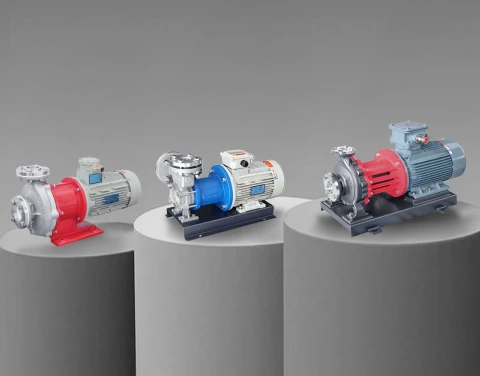
For thermal fluid applications specifically, magnetic drive pumps rated for continuous service at 350–400°C are now standard options in mold temperature control, reactor heating, and hot oil boiler circulation. Manufacturers like Aulank produce both coupled centrifugal hot oil pumps (WRY-H series, up to 350°C) and sealless magnetic drive vortex pumps (MDH/MDW series, up to 400°C) for these applications — offering OEMs a direct path to zero-leakage compliance in systems where thermal oil spills are a safety and environmental liability.
What This Means for Equipment Manufacturers and Procurement Teams
If you are specifying or purchasing industrial pumps for equipment sold into the EU market, three things are worth paying attention to right now:
1. Check MEI compliance for any rotodynamic water pump. The current threshold is MEI ≥ 0.40. The revised regulation will likely raise this and extend coverage to more pump types. Pumps that barely pass today may not pass tomorrow.
2. Consider the Extended Product Approach early. The upcoming rules will look at total system efficiency — pump plus motor plus drive. Pairing a high-efficiency pump with a VFD-compatible motor gives you a buffer against future compliance risk.
3. Evaluate sealless alternatives for hazardous or high-temperature media. EU fugitive emission rules and workplace safety directives are making sealed pumps harder to justify in chemical, pharmaceutical, and thermal oil applications. Magnetic drive pumps eliminate the most common failure point — the mechanical seal — and reduce both maintenance cost and environmental risk.
The EU pump market is valued at over USD 12 billion and growing at roughly 3.3% annually. The regulatory framework shaping that market is tightening. For manufacturers and buyers outside the EU, staying ahead of these changes is a sourcing advantage — not just a compliance checkbox.
Sources
- EU Ecodesign Review Study for Pumps — ecopumpreview.eu
- Commission Regulation (EU) No 547/2012 — EUR-Lex
- Ecodesign for Energy-Related Products Summary — EUR-Lex
- Water Pumps — European Product Registry for Energy Labelling
- Magnetic Drive Pump Market Report — Future Market Insights
- Europe Pumps Market Outlook — Grand View Research
- Pump Regulations in the European Union — ComplianceGate
