


Green hydrogen production has moved from demonstration scale to industrial deployment over the past 36 months. Levelized cost of hydrogen sits at USD 4–7/kg in early 2026, with industry roadmaps targeting USD 2–3/kg by 2030 — the threshold where green hydrogen displaces grey hydrogen in fertilizer, steel, and refining. Capital deployment is following: gigawatt-scale electrolyzer projects are operational in Europe, the Middle East, China, and Australia, with the global electrolyzer market crossing USD 8 billion in cumulative installed capacity. Behind every one of those electrolyzer stacks, there is a balance-of-plant. And inside that balance-of-plant, there are pumps doing some of the most demanding chemical-transfer duty in any commercial process.
We have spent more than a decade building magnetic-drive and canned-motor pumps for corrosive chemical service, high-purity duty, and continuous-operation thermal management. Hydrogen electrolyzer balance-of-plant draws on all three. This guide covers how to select pumps for the three dominant electrolyzer technologies — alkaline (ALK), proton exchange membrane (PEM), and anion exchange membrane (AEM) — with attention to the chemistry of each electrolyte, the engineering tradeoffs that integrators face, and the specific failure modes that distinguish electrolyzer pump duty from generic chemical processing.
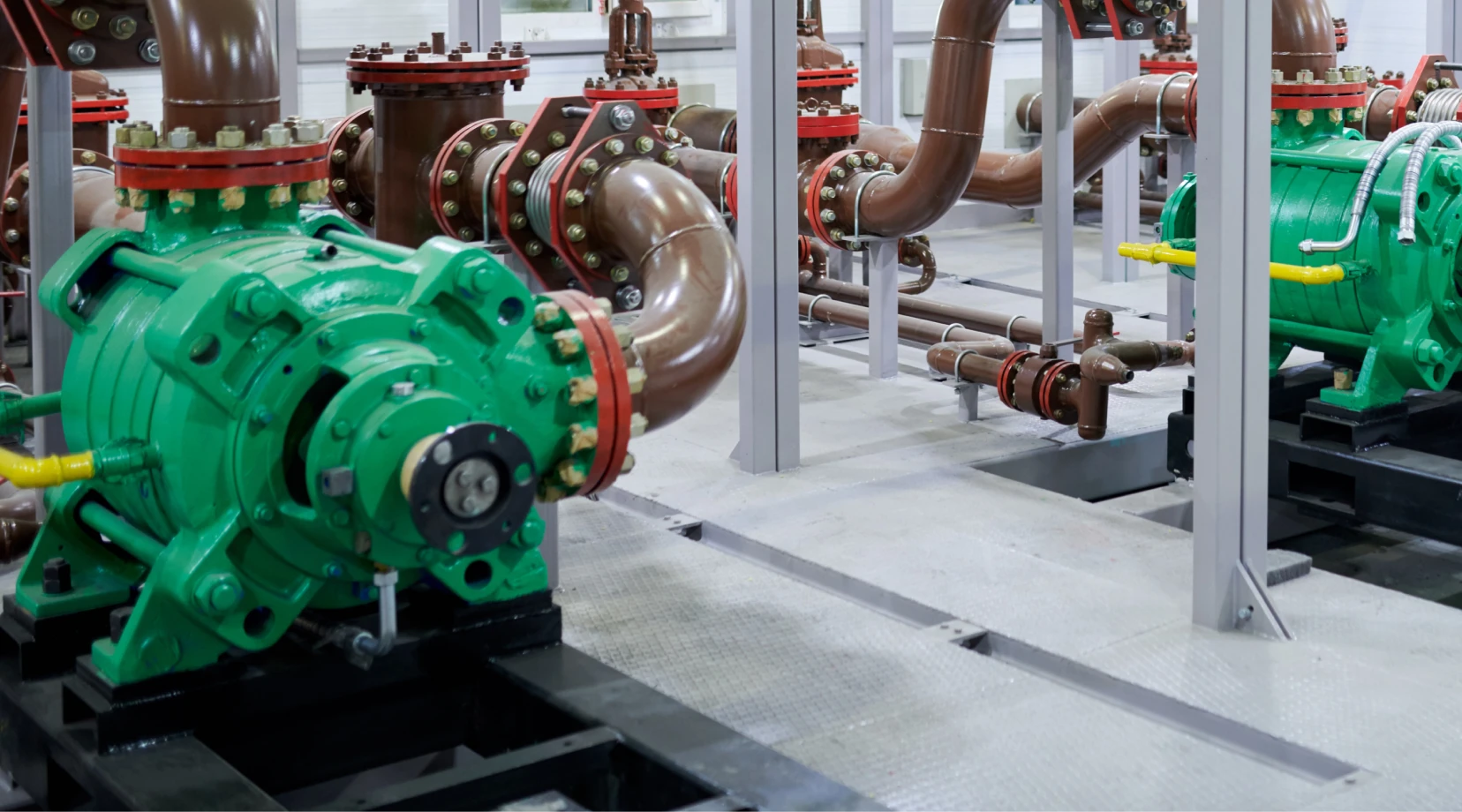
1. The Three Electrolyzer Technologies and What They Demand From a Pump
Green hydrogen is produced by splitting water with renewable electricity. Three technologies have reached commercial scale, and they impose very different requirements on the pump set:
● Alkaline electrolysis (ALK) holds 65–70% of global installed capacity. The electrolyte is concentrated potassium hydroxide (KOH) solution, typically 25–30% by weight, circulating between the cell stack and a gas-liquid separator. Operating temperature 70–90 °C, operating pressure 1–30 bar depending on system class. The cost leader, the mature technology, and the most chemically aggressive duty for the pump.
● Proton exchange membrane electrolysis (PEM) holds 30–35% of global share and is the fastest-growing technology, driven by its dynamic response (matches renewable intermittency) and high current density. The electrolyte is the membrane itself; the circulating fluid is ultrapure deionized water (resistivity > 1 MΩ·cm). Operating temperature 50–80 °C, operating pressure up to 70 bar. Less aggressive chemistry than ALK, but much tighter purity tolerance.
● Anion exchange membrane electrolysis (AEM) is the emerging third architecture, combining alkaline cost advantages with PEM-like compactness. The circulating fluid is dilute KOH (1–5% by weight) or dilute K₂CO₃ through a solid polymer membrane. Operating temperature 50–70 °C. The pump duty is intermediate between ALK and PEM in chemical aggression, but the membrane is sensitive to even trace metal contamination.
Each technology has three distinct pump stations:
● Electrolyte circulation pump — the main pump, moving electrolyte between the cell stack and the gas-liquid separator. Continuous duty, high flow, moderate head.
● Feed water pump — introduces makeup water to compensate for hydrogen and oxygen leaving the system. Lower flow, often higher pressure (matching stack operating pressure).
● KOH transfer / dosing pump — for ALK and AEM, periodic electrolyte makeup and pH adjustment. Low flow, intermittent duty, but pumping concentrated caustic.
Five engineering constraints cut across all of them: corrosion resistance against KOH at concentration and temperature, electrolyte purity protection (zero metal ion leaching for PEM and AEM, low Fe/Ni/Cr leaching for ALK), zero leakage of caustic and dissolved hydrogen, dynamic load response to follow variable renewable power, and 30,000+ hour service life in continuous operation.
2. Alkaline Electrolyzer Pumps: Handling 30% KOH at 90 °C
25–30% potassium hydroxide at 70–90 °C is one of the more demanding fluids in industrial chemical service. It attacks aluminum, zinc, and most copper alloys aggressively. It attacks 304 stainless steel at the upper end of its operating temperature. It will corrode standard cast iron pump housings within months. Three concrete failure modes a pump in this service faces:
● Caustic stress corrosion cracking. Even nominally compatible stainless steels can crack under sustained tensile stress in hot concentrated caustic. The classical chart from ASM (the caustic-temperature-concentration map) puts 30% KOH at 90 °C right at the boundary where 304 stainless becomes risky and 316L becomes the minimum acceptable grade. For stations above 90 °C, nickel-based alloys (Inconel 600, Monel 400) or PTFE-lined construction are specified.
● Hydrogen embrittlement of pump components. Dissolved hydrogen in the electrolyte (from the cathode side of the stack) can embrittle high-strength steels, including some bolt and shaft materials. The standard mitigations are low-strength stainless grades for fasteners and avoidance of cold-worked, high-yield-strength components in pump construction.
● Gas entrainment. KOH circulating from the stack arrives at the pump suction containing entrained hydrogen and oxygen bubbles. Centrifugal pumps cavitate against these bubbles and lose head; vortex (regenerative-turbine) pumps tolerate small entrained gas fractions much better. This is directly analogous to the gas-handling capability that matters in MTC pumps after a mold change.
For 25–30% KOH circulation duty at 70–90 °C, the architecture choice is between three options:
● Magnetic-drive vortex pump in PFA / PTFE-lined construction — full chemical compatibility, zero leakage, suits flows up to ~600 L/min per unit.
● Canned-motor centrifugal pump in nickel-alloy construction — higher capital cost, suited to larger gigawatt-class installations where multiple parallel circulation pumps are deployed.
● Standard 316L magnetic-drive pump — acceptable below 70 °C and 25% concentration, with careful material-handling QA. Lowest cost, but requires the operating envelope to stay within caustic-compatibility boundaries.
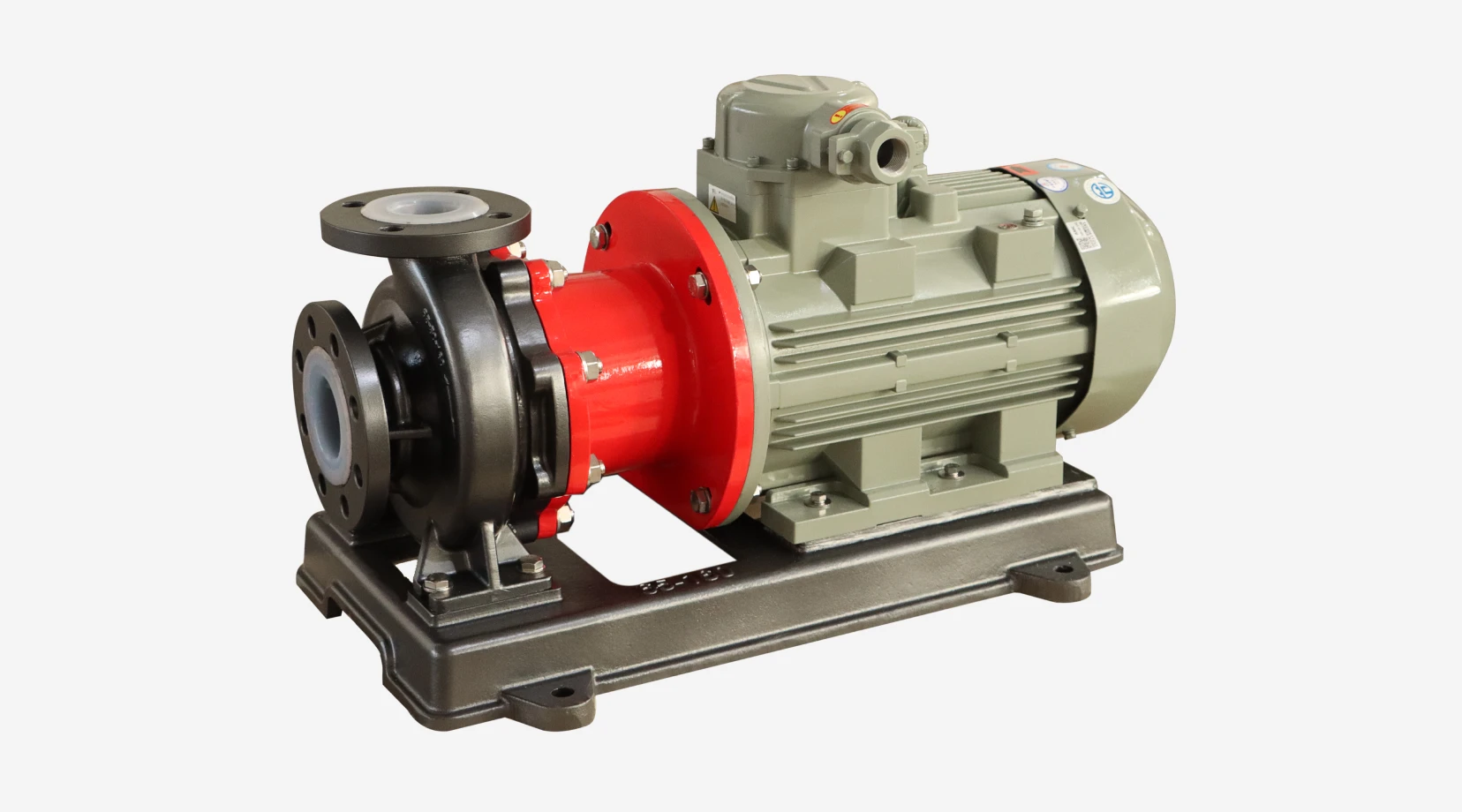
Our AMC-F PTFE-lined magnetic drive pump is the configuration we have shipped most often into alkaline electrolyzer balance-of-plant projects. The PTFE-lined wetted parts eliminate the corrosion concern entirely, and the magnetic-drive structure ensures zero KOH leakage even at the upper operating temperature. For lower-concentration AEM service, the standard MDH stainless steel vortex magnetic drive pump in 316L often suffices.
3. PEM Electrolyzer Pumps: Ultrapure Deionized Water and Metal-Ion Contamination
PEM electrolyzers run on the cleanest fluid in industrial process service: ASTM Type I deionized water with resistivity above 1 MΩ·cm (often specified at 10–18 MΩ·cm for premium stacks). The chemistry challenge inverts compared to ALK — the fluid itself is inert, but the consequences of any contamination from the pump are catastrophic for the membrane and the catalyst.
Three contamination paths a pump can create in PEM service:
● Iron ion leaching. Carbon steel piping, cast iron pump housings, ferritic stainless components — all leach Fe into circulating DI water at the ppb level over months of operation. Fe³⁺ cations migrate into the membrane and displace H⁺ protons, degrading conductivity. The membrane lifetime budget is finite; iron contamination shortens it. Solution: full 316L wetted parts minimum, mirror polish to Ra 0.4 µm or better, no exposed cast iron anywhere in the loop.
● Particulate shedding. PEM stacks use platinum-iridium catalysts on porous transport layers. Particulates above 5 µm blind the catalyst sites and reduce stack efficiency. Pumps must be cleanroom-grade on first fill and use mirror-polished internals to minimize particulate generation in service.
● Hydrocarbon contamination. Many standard pump lubricants and seal grease formulations contain hydrocarbons that contaminate PEM electrolyte at ppm levels. PFAS-based fluoropolymer lubricants are also problematic given tightening regulatory pressure. The cleanest solution is magnetic-drive architecture with silicon-carbide-on-silicon-carbide bearings lubricated by the process fluid itself.
For PEM electrolyte circulation duty in the 50–80 °C range, the typical pump specification is a magnetic-drive vortex pump in 316L mirror-polished construction. Operating pressure of 30–70 bar (for high-pressure stack designs that eliminate the hydrogen compressor) requires pumps rated for that working pressure, which is at the upper edge of standard mag-drive ratings and may require canned-motor architecture for the highest-pressure classes.
For broader background on corrosion-sensitive service and material selection, see our corrosion-resistant pump solutions page. The same iron-contamination control logic we apply to lithium battery production lines applies here, as covered in our lithium battery manufacturing pump selection guide.
4. AEM Electrolyzer Pumps: The Hybrid Duty Cycle
AEM electrolysis is the youngest of the three commercial technologies but the one growing fastest in early-stage deployments. It tries to combine the cost structure of alkaline (non-precious-metal catalysts, dilute electrolyte) with the form factor of PEM (solid polymer membrane, compact cell architecture). The pump duty inherits constraints from both:
● Electrolyte is 1–5% KOH or K₂CO₃ — much less aggressive than ALK at 30%, but still alkaline.
● Operating temperature 50–70 °C, modest by industrial chemistry standards.
● Membrane sensitivity to metal cations is high; reported IEC (ion exchange capacity) loss in sustained KOH exposure means trace iron, nickel, and chromium are still concerns.
● Pressure is typically near atmospheric to 5 bar — lower than PEM, which simplifies pump specification.
The pump architecture choice for AEM is usually a 316L magnetic-drive vortex pump with mirror-polish wetted parts, sized for continuous duty. The MDS stainless steel vortex magnetic drive pump and MDK stainless steel vortex magnetic pump families both fit. For installations where the system specification calls for fully metal-free wetted surfaces (some research-grade AEM systems), the AMC-F PTFE-lined variant is the alternative.
5. Following Renewable Power: Dynamic Load Response and Pump Turndown
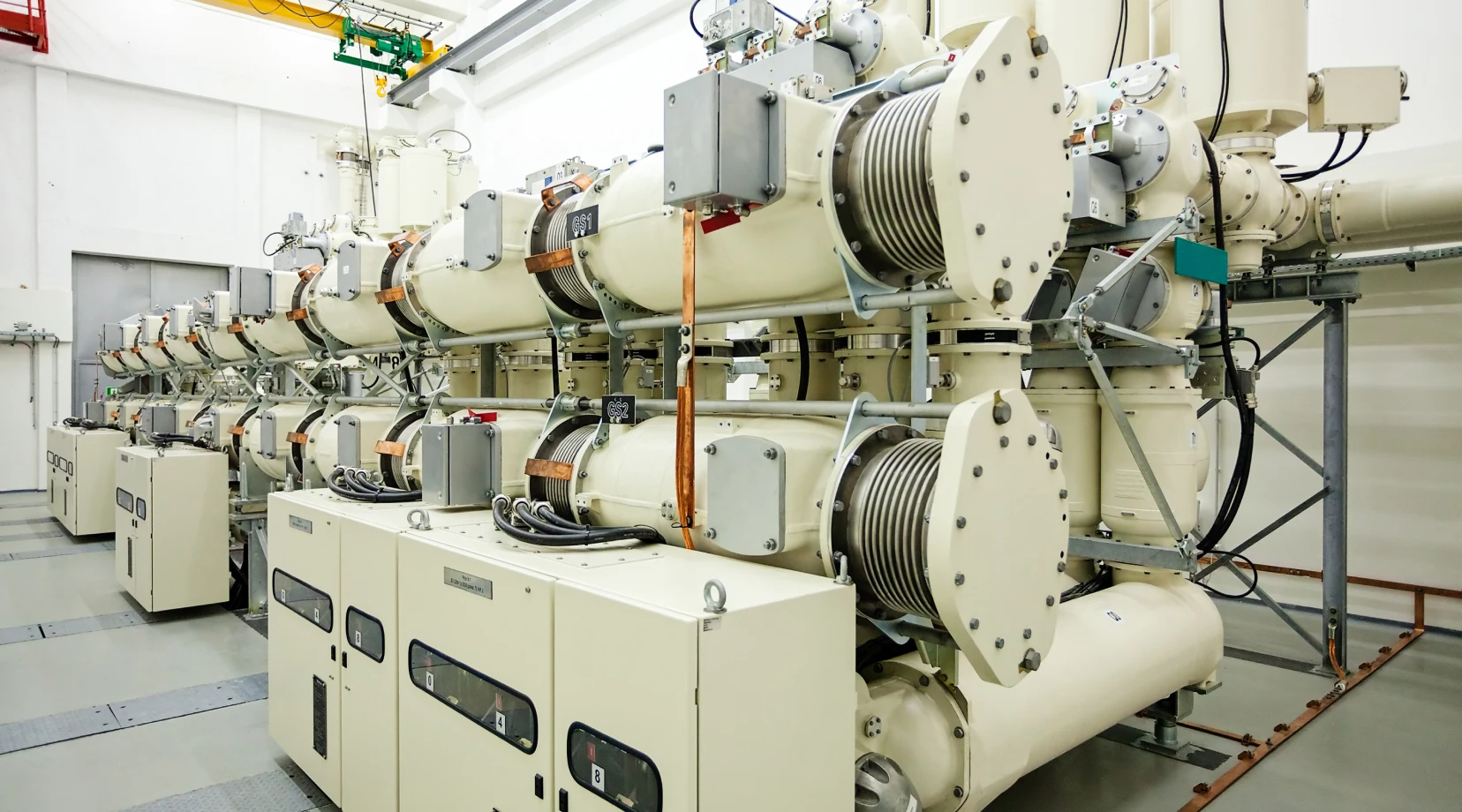
Green hydrogen by definition uses renewable electricity, which is intermittent. A PEM electrolyzer paired with a solar farm sees current density drop from rated to 10% within minutes as a cloud passes; an AEM unit paired with wind sees minute-scale ramping continuously. The pumps in the electrolyte loop must follow these load changes, which makes turndown capability one of the more consequential specifications:
● Specify VFD-controlled magnetic-drive pumps. Synchronous permanent-magnet motors with variable-frequency drive deliver smooth turndown from rated flow to 25–30% without efficiency collapse. Standard induction-motor centrifugal pumps lose efficiency rapidly below 60% rated flow and stall against the stack pressure curve.
● Avoid dry-start risk. During fast ramp-down, the electrolyte loop may briefly run with reduced fluid level in the separator. Magnetic-drive pumps with silicon-carbide bearings tolerate short dry periods (seconds) better than ceramic-on-ceramic or polymer bearings. Specify a dry-run protection algorithm in the PLC.
● Plan for cold-start margin. A renewable-tied electrolyzer cold-starts daily or weekly. Cold KOH is more viscous than hot KOH, so the pump motor sees higher load at start than at steady state. Specify motor torque with 25–30% margin above hot-running duty.
For broader background on synchronous permanent-magnet drive technology, which is one of our 10 core technologies, this configuration directly addresses both the turndown and cold-start margin requirements that electrolyzer integrators are now writing into procurement specifications.
6. KOH Transfer and Makeup Pumps: The Forgotten Station
Alkaline and AEM systems consume electrolyte slowly. KOH does not get split during electrolysis — it stays in solution — but water in the electrolyte does get split, hydrogen and oxygen leave, and the KOH concentration drifts upward over time unless makeup water is added and occasionally fresh KOH is added to compensate for spillage, blowdown, and concentration drift. This requires a KOH transfer pump that:
● Handles concentrated KOH (up to 45% storage concentration for bulk delivery to alkaline plants).
● Operates intermittently — minutes to hours between activations — without seal degradation from sitting wet.
● Tolerates restarts against settled or partially crystallized caustic at ambient temperature.
● Provides metered, repeatable volume (within ±1%) for pH and concentration control logic.
This is positive-displacement pump territory, not vortex. A magnetic-drive gear pump with PTFE-lined wetted parts, or a metering diaphragm pump, fits this duty. Our MDC-M micro mini magnetic gear pump handles low-flow dosing applications, and the MDC-K magnetic mechanical seal gear pump the higher-flow makeup transfer duty. For broader background on positive-displacement selection, see our positive displacement pump working principle and selection guide.
7. A Pump Architecture Decision Matrix for Hydrogen Electrolyzer Balance-of-Plant
The table below condenses our typical recommendations across the three electrolyzer technologies and the three main pump stations within each. These are starting points; specific stack design, operating pressure, and integrator preferences always require validation:
| Station | Fluid | Typical Conditions | Recommended Pump |
| ALK electrolyte circulation | 25–30% KOH, 70–90 °C | 300–3,000 L/min, 3–15 bar | PTFE-lined magnetic drive (AMC-F) |
| ALK feed water makeup | DI water, 25 °C | 5–30 L/min, stack pressure | 316L magnetic drive vortex (MDH) |
| ALK KOH transfer / dosing | 30–45% KOH, ambient | 1–20 L/min, intermittent | PTFE-lined magnetic gear (MDC-M or MDC-K) |
| PEM electrolyte circulation | DI water >1 MΩ·cm, 50–80 °C | 100–1,500 L/min, 5–70 bar | 316L mirror-polish magnetic drive (MDH or MDS) |
| PEM feed water makeup | DI water, 25 °C | 5–30 L/min, stack pressure | 316L magnetic drive vortex (MDH) |
| AEM electrolyte circulation | 1–5% KOH or K₂CO₃, 50–70 °C | 50–800 L/min, 1–5 bar | 316L magnetic drive vortex (MDS or MDK) |
| AEM makeup transfer | Dilute KOH | 1–10 L/min, intermittent | Micro magnetic gear (MDC-M) |
| Hydrogen dryer regeneration loop | Glycol or thermal oil | 20–100 L/min, 100–200 °C | 316L magnetic drive vortex (MDW) |
For sites incorporating waste-heat recovery on the dryer/compressor side, the high-temperature circulation duty is covered in our centrifugal vs gear hot oil pump comparison guide.
8. PFAS, REACH, and Regulatory Pressure on Electrolyzer Pump Specifications
European REACH restrictions on per- and polyfluoroalkyl substances (PFAS), increasingly mirrored in US state-level chemical regulations, are pushing electrolyzer integrators to re-examine the fluoropolymer content of their entire balance-of-plant. PTFE-lined pumps, FKM and FFKM elastomers, and certain gasket materials all contain regulated PFAS chemistry. Three procurement consequences worth tracking:
● Documentation: integrators are now asking for full PFAS content disclosure on every wetted component.
● Substitution: where chemistry permits, non-fluoropolymer alternatives (high-performance polyolefins, silicone-free thermoplastics) are being trialed. The 30% KOH at 90 °C use case is the hardest to substitute — PTFE remains the only fully compatible material at that combination.
● Containment-first design: even where PTFE remains in the wetted-parts list, magnetic-drive and canned-motor architecture protect the broader site against fugitive PFAS-bearing fluid loss, which makes compliance demonstrable.
We covered the broader regulatory picture in our PFAS regulations and chemical pump requirements guide, which is directly relevant to hydrogen project procurement teams now.
9. Aulank Hydrogen Electrolyzer Pump Portfolio
We have been supplying corrosion-resistant magnetic-drive pumps to chemical processing customers for 17+ years, and hydrogen electrolyzer balance-of-plant has been one of our newer verticals since 2023. The portfolio we typically recommend for ALK, PEM, and AEM integrator projects:
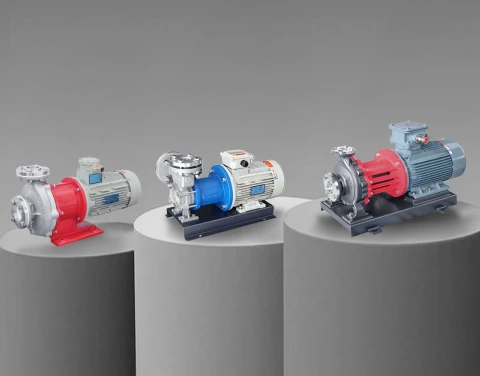
● AMC-F PTFE-lined magnetic drive pump — full PTFE-lined wetted parts for concentrated KOH circulation duty in ALK systems and for any high-purity station requiring metal-free contact.
● MDH stainless steel vortex magnetic drive pump — 316L mirror-polish construction for PEM electrolyte circulation duty on ultrapure DI water.
● MDS stainless steel vortex magnetic drive pump — higher-flow variant for AEM and large-format ALK systems.
● MDC-K magnetic mechanical seal gear pump and MDC-M micro mini magnetic gear pump — magnetic-drive positive-displacement units for KOH transfer, makeup dosing, and pH control loops.
● PWH/PWD/PWM canned vortex pump series — canned-motor variant for the highest-purity stations and for projects where static O-ring exposure paths are unacceptable.
What a hydrogen integrator gets from us specifically:
● Material certification on every wetted part — full traceability, ASTM compliance documentation, and PFAS content disclosure for regulatory documentation.
● VFD-compatible synchronous permanent-magnet motors for renewable-following turndown duty — one of our 10 core technologies.
● Custom pressure ratings up to 70 bar for high-pressure PEM stack integration.
● Documented quality control — ISO 9001 system, TÜV CE certification on magnetic-drive vortex pumps, individual parameter test records on every unit.
If you are sourcing pumps for a hydrogen electrolyzer project — whether a pilot AEM unit, a megawatt-class PEM module, or a gigawatt-scale alkaline plant — send us your station-by-station application conditions and we will return a recommended portfolio with quotes within two business days.
Get a Custom Hydrogen Electrolyzer Pump Configuration
Whether you are integrating ALK, PEM, or AEM electrolyzer modules, building balance-of-plant for a hydrogen project, or specifying makeup and dosing pumps for an operating site, our engineering team can match the right magnetic-drive or canned-motor pump architecture to each station.
Talk to our team: Contact Aulank | WhatsApp: +86 13773157367 | Email: info@aulankpump.com
Browse the relevant product and solution pages: