
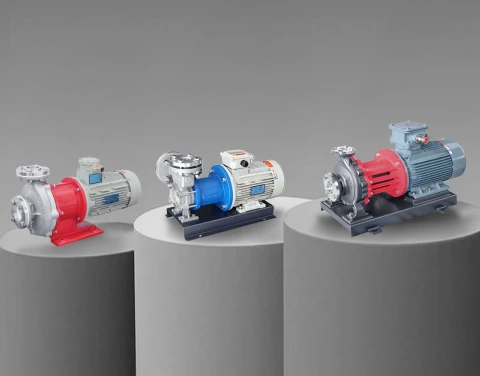



In the process industry, equipment reliability is directly correlated with production output and facility safety. Among all rotating equipment, the industrial centrifugal pump operates as the heart of the fluid transfer system. When these units fail, the consequences range from minor process interruptions to catastrophic environmental leaks and hazardous exposures. While modern engineering has significantly improved the durability of these systems, they are still subject to immense mechanical, hydraulic, and thermal stresses.
A reactive approach—fixing equipment only after it breaks—results in excessive downtime and inflated repair costs. Implementing a rigorous, predictive, and preventive maintenance protocol is essential for extending the Mean Time Between Failures (MTBF). This comprehensive guide outlines the critical maintenance practices required to keep continuous-duty process systems operating at peak hydraulic efficiency.

1. The Critical Role of Routine Industrial Centrifugal Pump Maintenance
The primary objective of industrial centrifugal pump maintenance is not simply replacing worn parts, but rather identifying and mitigating the root causes of wear before they compromise the system. Continuous operation subjects the impeller, casing, and mechanical seals to continuous friction, fluid turbulence, and potential chemical attack. Routine maintenance ensures that baseline performance metrics—such as flow rate, discharge pressure, and power consumption—remain stable over time.
By establishing a baseline when the equipment is newly commissioned, maintenance engineers can detect micro-deviations that indicate impending failure, allowing for scheduled interventions rather than emergency shutdowns. According to standards published by the authoritative , implementing a proactive maintenance strategy can reduce overall pumping lifecycle costs by up to 30%, while dramatically improving energy efficiency across the facility.

2. Daily and Weekly Maintenance Checks for Centrifugal Process Pumps
Effective maintenance begins with visual and auditory inspections conducted by plant operators on a daily and weekly basis. Operators should be trained to recognize the "normal" operating state of the centrifugal process pumps in their sector.
Daily checks must include monitoring the discharge pressure gauges to ensure they align with the pump's performance curve. Operators should look for visual signs of fluid pooling around the baseplate, which indicates an early mechanical seal leak. Additionally, checking the bearing housing temperature using a handheld infrared thermometer can quickly reveal lubrication issues or misalignment. Weekly tasks should involve a more detailed inspection of the motor housing for dust accumulation, checking the oil level through the sight glass (if applicable), and ensuring that the suction strainers are clear of debris that could restrict flow and cause a drop in Net Positive Suction Head (NPSH).

3. Bearing Lubrication and Monitoring in High-Flow Centrifugal Pumps
Bearings are the precise components that support the rotational shaft and absorb both radial and axial thrust loads. In high-flow centrifugal pumps moving massive volumes of fluid, the load on these bearings is substantial. The overwhelming majority of premature bearing failures are caused by improper lubrication—either using the wrong viscosity of oil/grease, over-lubricating, or under-lubricating.
For oil-lubricated systems, the oil must be kept clean and free of water contamination, which severely degrades its load-bearing film thickness. Oil should be sampled quarterly and changed according to the manufacturer's specified operating hours. For grease-lubricated bearings, it is critical not to pack the housing completely; over-greasing causes the rollers to churn the grease, generating excessive heat and accelerating failure. Upgrading to a properly maintained industrial centrifugal pump ensures that bearing housings are designed for optimal thermal dissipation.

4. Shaft Alignment Techniques for Industrial Centrifugal Fluid Pumps
Misalignment between the driving motor and the industrial centrifugal fluid pump shaft is a primary cause of vibration, premature seal wear, and catastrophic bearing failure. Even if a pump is perfectly aligned at the factory, the stresses of piping installation, foundation settling, and thermal expansion during operation will alter the geometry.
Traditional straight-edge and dial-indicator alignment methods, while functional, are often insufficient for high-speed or extreme-temperature applications. Modern facilities should utilize laser alignment tools to ensure both angular and parallel offset tolerances are within a few thousandths of an inch. Furthermore, engineers must account for "thermal growth." If a pump is handling fluids at high temperatures, the metallic casing and shaft will expand during operation; the "cold alignment" must be offset to ensure the machine achieves perfect "hot alignment" under operating conditions.

5. Mechanical Seal Inspection and Leak Prevention in Centrifugal Systems
The mechanical seal is arguably the most delicate component in a standard mechanically sealed pump, acting as the primary barrier between the process fluid and the atmosphere. Inspecting the seal support system is a mandatory maintenance procedure.
For single mechanical seals, a slow drip is an immediate red flag requiring replacement. For hazardous applications utilizing double mechanical seals with an API seal flush plan, engineers must rigorously monitor the barrier fluid tank. A sudden drop in barrier fluid pressure or volume indicates an inboard seal failure, allowing the barrier fluid to mix with the process media. An increase in pressure suggests the process fluid is breaching the seal and entering the barrier system. Regular inspection of the flush lines for blockages ensures the seal faces receive adequate cooling and lubrication.

6. Managing Vibration and Cavitation in Centrifugal Pumping Equipment
Vibration analysis is the cornerstone of predictive maintenance for centrifugal pumping equipment. By attaching accelerometers to the bearing housings, technicians can capture the vibration spectrum. Different mechanical faults generate specific vibration frequencies. For example, misalignment typically shows a high peak at exactly 1X or 2X the running speed, while bearing defects manifest at much higher, non-synchronous frequencies.
Cavitation is another destructive phenomenon that must be managed. It occurs when the fluid pressure drops below its vapor pressure at the impeller eye, forming gas bubbles that violently collapse as they are pushed into higher-pressure zones. This collapse physically pits the impeller metal and sounds like rocks passing through the casing. If cavitation is detected, maintenance teams must immediately check suction filters for blockages or raise the fluid level in the supply tank. Alternatively, utilizing a vortex pump can be a solution in systems where high gas entrainment is unavoidable.
7. Creating a Preventive Maintenance Schedule for Your Centrifugal Pump
A structured schedule eliminates guesswork and ensures consistency across multiple shifts and maintenance teams. The schedule should be integrated into the facility's Computerized Maintenance Management System (CMMS). Below is a baseline framework that should be adapted based on specific fluid properties and duty cycles.
| Maintenance Task | Recommended Frequency | Operating Condition Trigger | Action Required |
| Visual Inspection | Daily | Puddles or unusual noise | Check flange torque / seal integrity |
| Bearing Temp Check | Weekly | Temp exceeds baseline by 15°C | Verify oil levels / Re-grease |
| Vibration Monitoring | Monthly | Overall vibration > 0.15 in/sec | Schedule laser alignment |
| Laser Alignment | Semi-Annually | Post-piping work / high vibration | Re-shim motor base |
| Lubricant Change | Every 4,000 Hours | Discoloration or high particulate | Flush housing and replace oil |
| Wear Ring Inspection | Annually | 10% drop in discharge pressure | Replace internal wear rings |
8. Common Troubleshooting Scenarios for Industrial Centrifugal Water Pumps
Even with rigorous maintenance, unexpected operational issues can arise. Rapid troubleshooting minimizes production downtime. When industrial centrifugal water pumps fail to deliver flow, the first check must be the rotational direction of the motor; a reversed phase during electrical work will cause the impeller to spin backward, drastically reducing output.
If the pump operates loudly and the discharge pressure fluctuates rapidly, the system is likely drawing in air through a loose suction flange or the pump has lost its prime. If the motor trips the thermal overload breaker repeatedly, the fluid specific gravity may be higher than anticipated, or mechanical friction is overloading the electrical drive. Systematically isolating hydraulic variables from mechanical and electrical variables is the key to efficient troubleshooting. If your process involves complex dosing alongside circulation, integrating an industrial positive displacement pump control issues.
