


How PFAS Regulations Are Reshaping Chemical Pump Requirements Worldwide
Governments in the US and Europe are tightening controls on per- and polyfluoroalkyl substances (PFAS) at a pace that few industrial buyers anticipated even two years ago. For chemical processing facilities, this regulatory shift carries direct implications for fluid handling equipment — particularly pumps used to transfer, dose, or circulate aggressive chemicals in closed-loop systems.
The push to eliminate PFAS contamination from water supplies, manufacturing discharge, and product supply chains is forcing plants to rethink how they move corrosive and hazardous fluids. Leak-free operation is no longer a preference. It is becoming a regulatory requirement.
The Regulatory Timeline in 2026
In the United States, the EPA finalized enforceable drinking water limits for PFOA and PFOS at 4 parts per trillion in April 2024. Water systems must complete initial PFAS monitoring by 2027 and achieve full compliance by 2029–2031. Meanwhile, the TSCA reporting deadline for PFAS manufacturers and importers now runs from April to October 2026, requiring companies to disclose production volumes, uses, and disposal methods going back to 2011.
At the state level, at least 15 new PFAS laws are taking effect in 2026 across the US, including broad product bans in California, Minnesota, and Illinois. The EPA has also proposed designating nine PFAS compounds as RCRA hazardous constituents, with a finalization target of April 2026.
In the EU, the situation is even more sweeping. Five member states submitted a universal PFAS restriction proposal to the European Chemicals Agency (ECHA) under REACH in January 2023. A revised version was published in August 2025, and ECHA's scientific committees are currently evaluating it. If adopted, it would restrict virtually all PFAS across all industrial and consumer uses — the broadest chemical restriction in REACH history. The EU Drinking Water Directive, with key PFAS provisions entering force in January 2026, adds further pressure on water treatment infrastructure.
What This Means for Chemical Pump Selection
PFAS regulations are driving two parallel equipment trends in chemical processing plants:
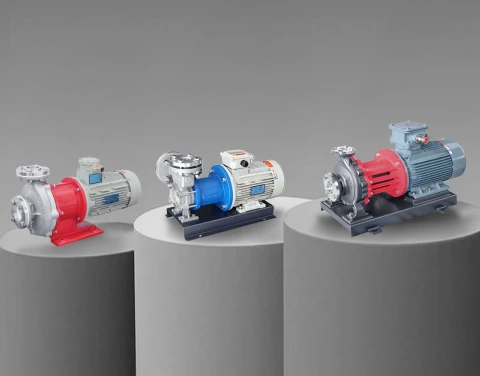
Zero-leakage pump requirements. Facilities handling PFAS-containing fluids or aggressive solvents used in PFAS remediation face increasing scrutiny on fugitive emissions. Traditional mechanical seal pumps are a known leak point. Magnetic drive pumps eliminate the shaft seal entirely, transmitting torque through an isolation sleeve — no penetration, no leakage path. This makes them a practical choice for processes where even trace-level fluid escape could trigger a compliance issue or environmental liability.
Demand for chemically resistant wetted materials. PFAS remediation and chemical processing often involve concentrated acids, caustic solutions, and organic solvents that attack standard stainless steel. Pumps with fluoropolymer-lined casings, PEEK components, or Hastelloy internals are increasingly specified for these services. For corrosive chemical transfer at moderate temperatures, chemical process magnetic drive pumps built with 316L stainless steel or fluoroplastic-lined construction provide both material compatibility and sealless containment.
Industry Data Points
The corrosion-resistant magnetic pump market reached approximately USD 1.5 billion in 2023 and is projected to grow to USD 2.7 billion by 2032, according to DataIntelo. The broader corrosion-resistant pump market is expected to grow at a 4.2% CAGR through 2035, with chemical processing and water treatment as the primary demand drivers.
Sealless magnetic drive pumps specifically are growing at 4.5–6.2% CAGR globally. Europe and North America are the fastest-adopting regions due to the regulatory pressure described above. Germany, France, and the UK lead European adoption, while US demand is concentrated in chemical, pharmaceutical, and water treatment sectors.
For facilities evaluating pump upgrades in response to PFAS-related compliance requirements, the selection comes down to material compatibility, sealing method, and total cost of ownership. Aulank's chemical pump product line — including PTFE-lined magnetic drive models (AMC-F series) and stainless steel magnetic drive vortex pumps (MDH/MDW series) — covers a range of corrosive media from strong acids to organic solvents, with operating temperatures up to 400°C and zero-leakage magnetic coupling design.
Sources
- Global PFAS Regulations: 2025–2026 Compliance Guide — Certivo
- New Global PFAS Regulations: How to Remain Compliant in 2026 — Source Intelligence
- EU PFAS Regulation: 2026 Status Update — Healthy Europe
- Federal PFAS Regulation: 2025 Activities and 2026 Actions — BCLP
- Magnetic Drive Pump Market Report — Future Market Insights
- Corrosion-Resistant Pumps Market Forecast — IndexBox
