



The cheapest pump on the quote is rarely the cheapest pump to own. On a typical industrial pump, the purchase price is under 10% of what the pump costs over its life. The rest is energy, maintenance, downtime, and the cost of dealing with leaks. Buy on sticker price alone and you can lock in higher bills for the next fifteen to twenty years. Total cost of ownership (TCO), or life cycle cost (LCC), is the number that actually decides the spend — and it settles one of the most common questions we get: is a sealless pump worth the higher price over a sealed one?
We build sealless magnetic-drive, canned-motor, and vortex magnetic pumps, so we have a stake in the answer — and we will be straight about where a sealed pump is the cheaper choice and where it is not. What follows is the cost breakdown: what TCO actually includes, where the money really goes, why the mechanical seal is the cost driver people miss, and how the sealed-versus-sealless maths comes out, with a worked example you can adapt to your own numbers.
What “Total Cost of Ownership” Actually Includes
The pump industry has a standard way to do this. The Hydraulic Institute and Europump life cycle cost framework splits a pump's lifetime cost into these elements:
● Initial cost — the pump, motor, drive, and accessories on the purchase order.
● Installation and commissioning — foundation, piping, wiring, and start-up.
● Energy — the electricity to run the pump, set by the duty, the efficiency of the pump and motor, and the running hours.
● Operating — routine labour to run and supervise the system.
● Maintenance and repair — spare parts and the hours spent on planned and unplanned work, including seals, bearings, and wear parts.
● Downtime and lost production — the cost of the process stopping when the pump is out of service.
● Environmental — handling leaks, fugitive emissions, flush-water disposal, and compliance.
● Decommissioning and disposal — removal and disposal at end of life.
Add these over the service life — commonly fifteen to twenty years — and discount them to present value, and you have the pump's TCO. The result is consistent across the published studies: the purchase price is a small slice, usually under 10%.
Where the Money Actually Goes
For most installations two elements dominate: energy and maintenance. Energy is usually the single largest cost over a pump's life, because a pump running continuously burns through many times its purchase price in electricity every few years. Pumping systems account for roughly a fifth of the world's electricity use, which is why pump efficiency and right-sizing carry real money. Maintenance is the next big block, and within maintenance one component shows up again and again. We cover the hydraulic side of the energy question in our industrial centrifugal pump efficiency guide; the rest of this article is about the maintenance and leakage side, where the sealed-versus-sealless choice is actually decided.
The Seal Is the Cost Driver People Miss
On a conventional pump, the mechanical seal is the most common cause of unplanned downtime. It is a precision wear part running between two flat faces, and it fails from misalignment, abrasives, dry running, heat, a poor flush, or simple wear. Each failure is not just the price of a new seal — it is the labour to fit it, the production lost while the pump is down, and, on hazardous fluids, the cost of the leak. A single unplanned seal failure on a process pump can mean the better part of a day of downtime and several thousand dollars once parts, labour, and lost output are added up. A pump that fails a few times a year turns that into a recurring line item that never appears on the original quote.
Sealed pumps on demanding duties also need a seal support system — a flush or barrier-fluid arrangement that cools and lubricates the seal faces. That is water or barrier fluid consumed continuously, plus the cost of treating or disposing of it. On toxic or volatile fluids the seal carries one more cost: fugitive emissions through the seal faces, which bring both a compliance burden and a safety exposure. None of this is on the purchase order, and all of it lands in the TCO.
The Sealless Trade-off, Honestly
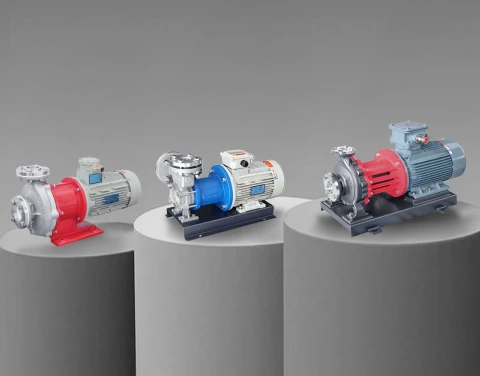
A sealless pump — magnetic-drive or canned-motor — removes the mechanical seal entirely. Torque crosses a static containment shell through a magnetic coupling, so there is no dynamic seal to fail, no flush water to feed, and no fugitive-emission path. That deletes a whole column of the TCO. It is not free, though, and two costs move the other way:
● Higher purchase price — a sealless pump generally costs more up front than a comparable sealed pump.
● A small energy penalty — magnetic-drive pumps run a few percent less efficient than an equivalent sealed pump, commonly around 3–8%, because of magnetic and eddy-current losses, so the energy line is slightly higher.
● Operating discipline — sealless pumps cannot run dry and dislike solids, so they need dry-run protection and a clean fluid.
So the sealless question is a straight trade. You pay more up front and a little more for energy, and in return you delete the seal's replacement, downtime, flush, and emission costs. Whether that nets out in your favour depends entirely on the duty.
A Lifetime Cost Comparison (Illustrative)
Here is the trade-off as numbers. Take a mid-size chemical process pump — roughly 15 kW, running 8,000 hours a year, electricity at $0.12/kWh, over a 15-year life — and set a sealed pump against a sealless one. The figures below are illustrative and rounded; the point is the shape of the result, not the exact dollars. Plug in your own duty, energy price, and seal history.
| Cost element (15-year) | Sealed pump | Sealless pump | Note |
| Purchase + installation | $12,000 | $17,000 | Sealless costs more up front |
| Energy | $216,000 | $227,000 | Sealless ~5% less efficient here |
| Seal replacements | $18,000 | $0 | e.g. seal + labour every 2–3 yr |
| Seal flush / barrier fluid | $6,000 | $0 | Water/fluid plus disposal |
| Unplanned downtime (seal-driven) | $30,000 | $4,000 | Fewer stoppages without a seal |
| Leakage / emissions / cleanup | Varies – high | ~$0 | Hazardous-fluid duties only |
| Bearing / wear parts | $6,000 | $9,000 | Sealless bearings need clean fluid |
| Indicative 15-year total | ~$288,000+ | ~$257,000 | Before leakage/compliance costs |
Two things stand out. Energy dwarfs everything, and it is similar for both options — so the decision is not really about the headline energy number. It is settled by the seal-related costs on one side against the capital premium and small energy penalty on the other. In this example, on a hazardous or seal-troublesome duty, the sealless pump wins on lifetime cost despite costing more to buy. Change the inputs to a clean, benign fluid with reliable seals and cheap downtime, and the result can flip the other way.
When a Sealed Pump Is the Better Economic Choice
A sealed mechanical-seal pump is often the right economic call when:
● The fluid is clean, benign, and non-hazardous, so a leak is cheap and tolerable.
● The duty is abrasive or solids-laden, where sealless bearings wear quickly — that load suits a sealed pump or a Positive Displacement Pump Series design built for solids.
● Seals last well in the service and unplanned downtime is inexpensive.
● The flow is very large, where the magnetic coupling for a sealless pump becomes costly or impractical.
● Capital budget is tight and the fluid does not justify the premium.
In these cases the seal's lifetime cost is low, and paying a capital premium to delete it does not pay back.
When a Sealless Pump Pays Back
A sealless magnetic-drive or canned-motor pump usually wins the TCO when:
● The fluid is hazardous, toxic, flammable, volatile, or valuable, so any leak is expensive or unacceptable and zero leakage is a requirement rather than a preference.
● Seals fail often in the service — corrosive, hot, or poorly lubricated fluids that chew through seal faces.
● Downtime is expensive, so each avoided seal failure is worth far more than the capital premium.
● Emissions and compliance matter, where fugitive losses through a seal carry penalties and reporting.
● The fluid is clean enough to protect the sealless bearings.
This is the territory we build for — corrosive and high- or low-temperature process fluids where leakage is not an option. Our Chemical Pump Series, leak-proof pump solutions, and corrosion-resistant pump solutions pages cover the sealless options, and canned motor pump technology explains the canned-motor variant. For the engineering behind magnet coupling and torque margin, see our magnetic drive pump selection guide.
Where Sealless TCO Claims Get Oversold
Since we sell sealless pumps, it is worth saying plainly where the cost case gets pushed too far. A few claims do not survive contact with a real plant:
● “Sealless is always cheaper over the life.” It is not. On a clean, benign fluid with a reliable seal, the sealed pump's lower capital and slightly better efficiency can win, because the seal simply does not cost enough to be worth deleting.
● “There is no energy difference.” There is. The magnetic and eddy-current losses are real, and on a pump running thousands of hours a year that few-percent penalty is a measurable number, not a rounding error.
● “Sealless means maintenance-free.” It does not. Take the seal away and the failure mode moves to the bearings and the magnets, and a rotor wrecked by dry running or abrasives, or magnets demagnetized by overheating, is an expensive repair. The savings are real only if the pump is run within its limits and the fluid is kept clean.
● “Modern seals have not improved.” They have. Cartridge seals, dual seals, and dry-gas seals have raised reliability on duties that used to chew through single seals, which narrows the gap on some applications.
The honest version of the sealless cost case is narrower and stronger than the marketing version. On hazardous, valuable, or seal-troublesome fluids, deleting the seal pays back clearly. On benign, clean, seal-friendly duties, it often does not. Run the numbers for your own duty rather than trusting either sales pitch.
How to Run Your Own TCO in an Afternoon
You do not need the full HI/Europump workbook to get a useful answer. Gather a handful of inputs and the comparison falls out:
● Duty and running hours — kW absorbed and hours per year give the energy cost at your electricity price.
● The two purchase prices — sealed versus sealless for the same duty.
● Your seal history — how often seals fail in this service, and the parts-plus-labour cost each time.
● Downtime cost — what an hour of this process being down is worth, times the hours lost per failure.
● Flush and leakage — water or barrier-fluid cost, plus any emission or cleanup exposure on the fluid.
● The horizon — fifteen to twenty years, discounted to present value if you want to be precise.
Add the lifetime totals for each option and compare. If you would rather not build the spreadsheet, send us the duty and your seal and downtime history and we will run the comparison with you.
Get a Lifetime-Cost Comparison for Your Duty
Whether you are replacing a pump that keeps eating seals or specifying a new line, we can put real numbers against the sealed-versus-sealless decision for your fluid, duty, and running hours — and match the right sealless magnetic-drive, canned-motor, or vortex magnetic pump if that is where the maths points.
Talk to our team: Contact Aulank | WhatsApp: +86 13773157367 | Email: info@aulankpump.com
Related reading: magnetic drive pump selection guide · Chemical Pump Series