


The automated filling of lithium-ion battery cells requires the precise, high-volume transfer of electrolyte solutions. The industry-standard electrolyte consists of a conducting salt, predominantly Lithium Hexafluorophosphate (LiPF6), dissolved in a matrix of highly volatile organic dialkyl carbonates such as Ethylene Carbonate (EC), Dimethyl Carbonate (DMC), and Diethyl Carbonate (DEC). Fluid transfer in this environment presents one of the most severe containment challenges in chemical engineering. LiPF6 is extremely hygroscopic and violently reactive with atmospheric moisture. Even trace amounts of humidity trigger a hydrolysis reaction that generates Hydrofluoric Acid (HF), an aggressively corrosive and highly toxic compound. Traditional centrifugal and positive displacement pumps equipped with dynamic mechanical seals structurally fail in electrolyte service. The microscopic fluid film required for seal lubrication exposes the electrolyte to ambient moisture, initiating localized HF acid generation that rapidly destroys the seal materials and releases toxic gases into the cleanroom. This engineering guide details the transition toward sealless fluid containment in battery manufacturing, examining how magnetic drive architectures establish an impenetrable moisture boundary, prevent transition metal contamination, and deliver the precise hydraulic profiling required for high-speed cell injection.
The Hydrolysis of LiPF6 and HF Acid Generation
The core engineering vulnerability of battery electrolyte lies in the chemical instability of the LiPF6 salt when exposed to water (H2O). In a perfectly anhydrous (dry) environment, LiPF6 remains stable and provides the necessary ionic conductivity for lithium-ion transfer.
However, upon contact with atmospheric humidity, LiPF6 undergoes rapid hydrolysis. The reaction yields Phosphoryl Fluoride (POF3) and Hydrofluoric Acid (HF). Hydrofluoric acid is uniquely destructive. Unlike standard industrial acids, HF rapidly attacks and dissolves silicon-based compounds (including standard ceramics and glass) and aggressively corrodes most industrial metals. In a battery cell, the presence of HF acid degrades the solid electrolyte interphase (SEI) layer, dissolves transition metals from the cathode, and destroys battery capacity. In a fluid handling system, the generation of HF acid constitutes a catastrophic material failure event.
Moisture Ingress at the Dynamic Seal Boundary
Mechanically sealed pumps are fundamentally unsuited for LiPF6 transfer due to their reliance on a dynamic shaft penetration. A mechanical seal maintains fluid containment by pressing a rotating face against a stationary face. This configuration requires a microscopic layer of the pumped fluid to migrate between the faces to provide hydrodynamic lubrication and cooling.
When pumping electrolyte, this lubricating film inevitably contacts the atmosphere at the outer edge of the seal. The ambient humidity instantly reacts with the LiPF6 in the film, generating highly concentrated Hydrofluoric Acid directly on the seal faces. If the mechanical seal utilizes standard silicon carbide or alumina oxide, the HF acid chemically dissolves the ceramic matrix. This corrosive attack pits and scores the precision-lapped faces, destroying their flatness. Within hours of continuous operation, the seal geometry fails, resulting in a hazardous blowout of flammable carbonate solvents and toxic HF vapor into the manufacturing facility.
Establishing the Hermetic Moisture Barrier
The structural solution to HF generation and seal destruction is the complete elimination of the dynamic shaft. Sealless magnetic drive architectures replace the physical drive shaft with a synchronized magnetic coupling separated by a stationary containment shell (isolation sleeve).
This containment shell acts as an absolute, static pressure boundary. Because there are no rotating seals or packed glands intersecting the fluid envelope, there is zero pathway for atmospheric moisture to enter the pump casing, and zero pathway for the volatile electrolyte to escape. The LiPF6 remains hermetically sealed in a strictly anhydrous environment. By eliminating the point of atmospheric exposure, the magnetic drive pump structurally prevents the hydrolysis reaction, completely eradicating the generation of Hydrofluoric Acid and securing the long-term integrity of the fluid transfer loop.
Metallurgical Purity and Contamination Control
Lithium-ion cells are extraordinarily sensitive to metallic contamination. The introduction of transition metals—such as Iron (Fe), Copper (Cu), or Zinc (Zn)—into the electrolyte stream at the parts-per-million (ppm) level causes severe electrochemical defects. These metallic ions deposit onto the anode during battery cycling, forming dendrites that pierce the separator, leading to internal micro-short circuits, elevated self-discharge rates, and catastrophic thermal runaway.
Pump metallurgy must adhere to strict battery-grade purity requirements. Magnetic drive pumps deployed in electrolyte filling lines are constructed with ultra-low carbon 316L stainless steel volutes and impellers. The components undergo rigorous chemical passivation and electropolishing. This processing removes all free iron from the surface matrix and forms a highly dense, stable chromium oxide layer. This inert passive layer prevents the organic carbonates from leaching transition metals out of the steel, guaranteeing that the pump delivers ultra-pure electrolyte directly to the injection nozzles.
Tribology in Low-Viscosity Carbonates: SSiC Bearings
In a sealless magnetic drive pump, the inner rotor assembly operates fully submerged and is supported by internal journal bearings lubricated solely by the process fluid. The organic carbonate solvents (DMC, DEC) used in battery electrolytes possess very low kinematic viscosity, providing exceedingly poor hydrodynamic lubricity.
To prevent dry friction and bearing seizure, process engineers mandate Sintered Silicon Carbide (SSiC) for all internal wetted bearings and thrust washers. Unlike reaction-bonded silicon carbide, which contains free silicon that is highly vulnerable to trace HF acid attack, SSiC is a single-phase material with extreme chemical inertness. It provides exceptional mechanical hardness and a remarkably low coefficient of friction. This allows the SSiC bearings to maintain a stable hydrodynamic fluid film even in low-viscosity solvents, ensuring thousands of hours of continuous, zero-wear operation without generating particulate contamination.
Vortex Hydraulics for Pulsation-Free Injection
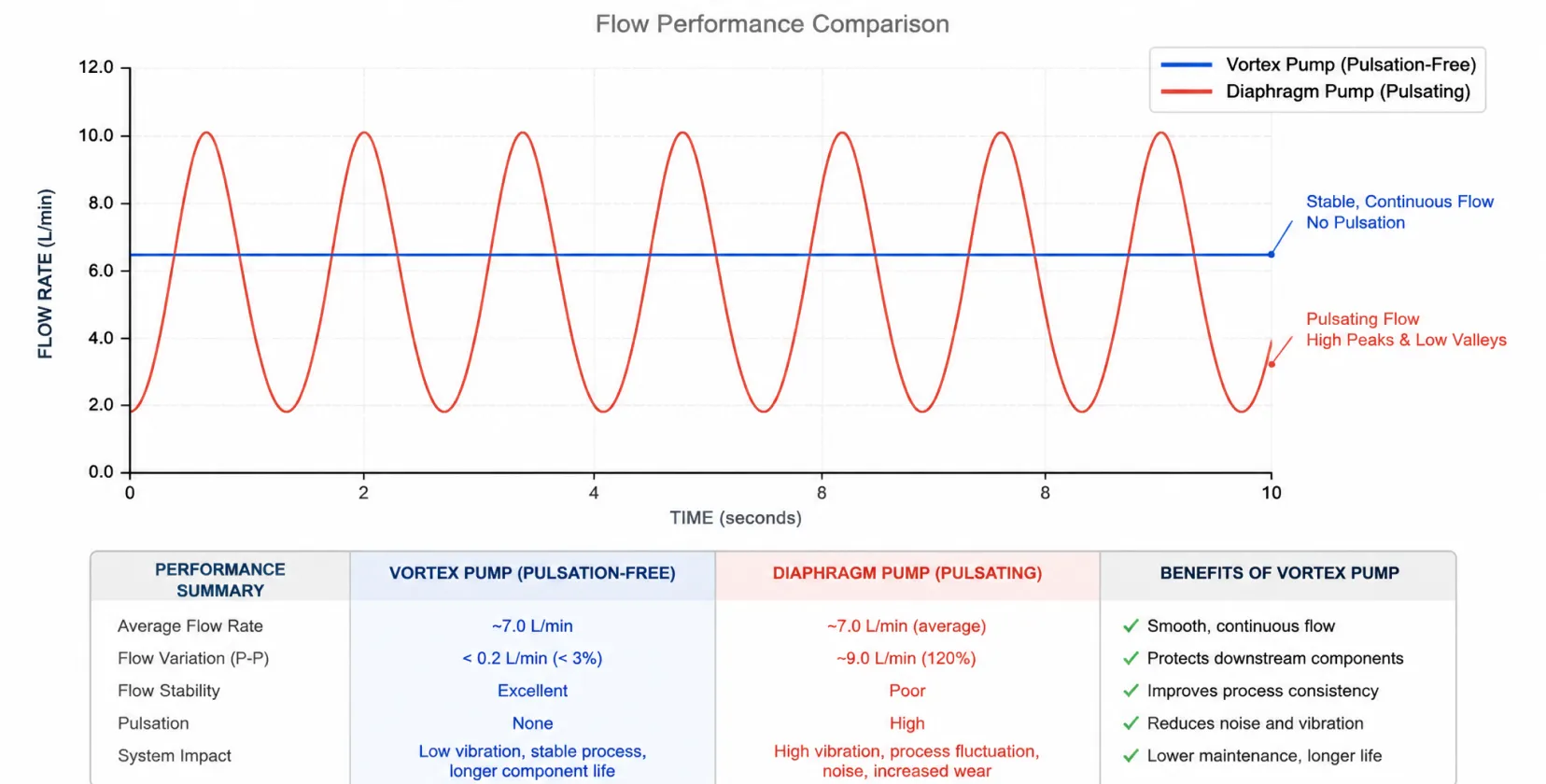
The final stage of electrolyte handling involves injecting the fluid into the individual battery cells. This process requires precise, highly repeatable volumetric dosing. Positive displacement pumps, such as air-operated double diaphragm (AODD) pumps, inherently generate hydraulic pulsation, causing pressure spikes that disrupt the accuracy of injection nozzles and flow meters.
For stable, continuous, pulsation-free delivery, battery manufacturers utilize the vortex pump architecture. A vortex (regenerative peripheral) impeller transfers kinetic energy to the fluid continuously in a spiraling motion around the annular channel. This generates a strictly linear, high-head pressure curve that exceeds standard centrifugal capabilities. This hydraulic stability ensures that a constant, non-fluctuating head pressure is maintained upstream of the dosing manifold, allowing the injection valves to deliver exact electrolyte volumes with maximum precision.
Conclusion
The severe moisture reactivity and extreme purity requirements of LiPF6 electrolytes render mechanically sealed pumps obsolete for battery cell manufacturing. Relying on dynamic seals guarantees atmospheric moisture ingress, the generation of highly destructive Hydrofluoric Acid, and inevitable environmental contamination. By transitioning to sealless magnetic drive architectures equipped with passivated 316L stainless steel, HF-resistant SSiC bearings, and precision vortex hydraulics, battery manufacturers establish a completely anhydrous, hermetic boundary. This structural evolution eliminates toxic emissions, prevents metallic contamination, and ensures the strict hydraulic stability required for high-yield gigafactory operations.
Engineered Fluid Solutions with Aulank Pump
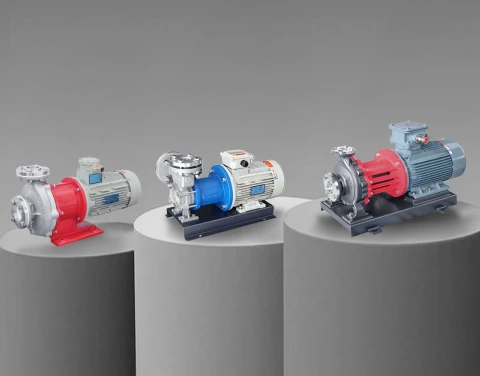
Aulank Pump designs specialized sealless fluid transfer equipment explicitly engineered for the rigorous containment and purity requirements of the lithium-ion battery manufacturing sector. Our high-performance magnetic drive pumps provide the absolute hermetic containment required to safely process highly reactive electrolytes, toxic solvents, and aggressive precursor chemicals. By combining ultra-low carbon metallurgy with advanced regenerative vortex hydraulics, as seen in our MDP Permanent-Magnet Canned Vortex Magnetic Drive Pump, Aulank delivers pulsation-free, zero-leakage fluid handling that protects operator safety and cell integrity. Consult our engineering team for precise material compatibility analysis, passivation protocols, and system integration support for your gigafactory fluid transfer lines.
