


Chemical corrosion destroys pumping equipment with predictable certainty if the wetted metallurgy is mismatched to the process fluid. Aggressive media such as hydrochloric acid, sodium hypochlorite, and mixed sulfuric compounds rapidly dissolve standard austenitic stainless steels, leading to compromised pressure boundaries, catastrophic leaks, and unscheduled plant shutdowns. Specifying a corrosion-resistant pump requires analyzing the chemical composition, concentration, temperature, and abrasive fraction of the fluid to dictate the exact wetted materials. Industrial fluid handling demands absolute chemical inertness combined with rigid mechanical stability. This technical specification outlines the material science, structural engineering, and shaft sealing architectures necessary to deploy fluoropolymer-lined and specialized alloy pumps in severe chemical processing environments.
The Mechanics of Chemical Attack in Fluid Systems
Standard metallic pumps fail in aggressive environments through several distinct mechanisms of chemical degradation. Identifying the failure mode dictates the material upgrade required.
● General Corrosion: The uniform dissolution of the metal surface across the entire wetted casing and impeller. This typically occurs when pumping strong acids (like sulfuric or hydrochloric acid) using standard 304 or 316 stainless steel, resulting in rapid material thinning and eventual casing rupture.
● Pitting and Crevice Corrosion: Highly localized attacks caused by specific chemical ions penetrating the passive oxide layer of the metal. Halogens, particularly chloride ions found in brine and sodium hypochlorite, aggressively drill microscopic pits into stainless steel. The pump appears structurally sound externally while failing catastrophically from the inside out.
● Stress Corrosion Cracking (SCC): The combination of tensile mechanical stress (from pipe strain or high-pressure operation) and a corrosive environment. SCC causes sudden, brittle failure in metallic casings at stress concentration points, even if the overall corrosion rate is calculated as negligible.
Assessing Wetted Materials: Exotic Alloys vs. Fluoropolymers
Engineering the wetted boundary involves choosing between high-performance metallic alloys and non-metallic fluoropolymer linings.
High-Alloy Metallic Pumps
When operational pressures and temperatures exceed the physical limits of plastics, metallic pumps remain mandatory. Duplex stainless steels resist chloride stress corrosion better than standard austenitic grades. Hastelloy C-276 provides exceptional resistance to highly oxidizing chlorides and wet chlorine gas. Titanium excels in hot brine and hypochlorite service. However, exotic alloys carry massive capital costs, extremely long procurement lead times, and highly specific chemical limitations. A Titanium pump handles bleach perfectly but dissolves rapidly if exposed to dry chlorine gas or hydrofluoric acid.
Fluoropolymer-Lined Armor Pumps
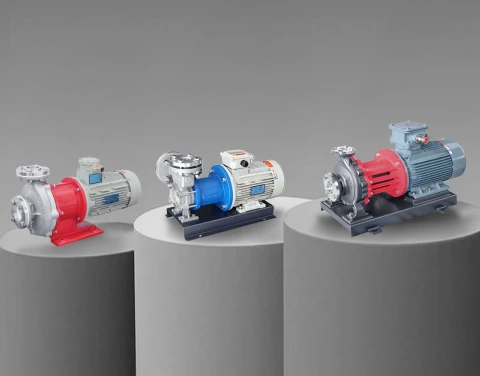
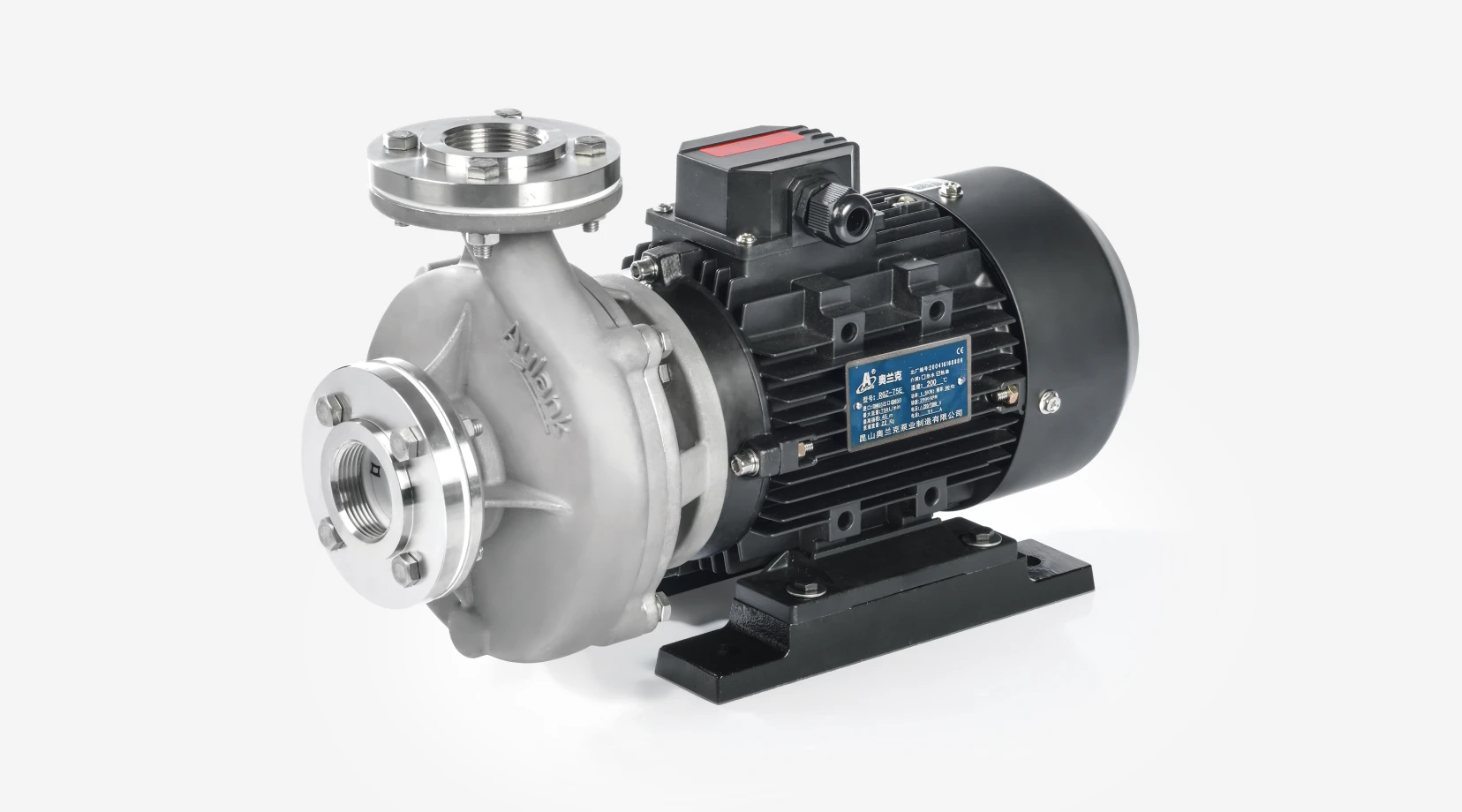
Fluoropolymers provide near-universal chemical inertness at a fraction of the cost of exotic alloys. Plastics like PTFE (Polytetrafluoroethylene) and PFA (Perfluoroalkoxy) ignore chlorides, acids, bases, and solvents entirely. To compensate for the low tensile strength of plastic, heavy-duty chemical pumps utilize an armored design. A rugged ductile iron outer casing absorbs all pipe strain, hydraulic pressure, and mechanical shock. The fluoropolymer is then molded at high pressure into the interior of the iron casing, creating a continuous, seamless wetted path. The process fluid only touches the inert plastic, while the ductile iron provides industrial-grade structural rigidity.
The Engineering of Fluoropolymer Linings
Applying plastic to a pump casing requires precision engineering to prevent separation during operation. The lining process dictates the pump's tolerance to vacuum and temperature fluctuations.
● PTFE (Polytetrafluoroethylene): Provides exceptional corrosion resistance and a very low coefficient of friction. However, PTFE is mechanically softer and subject to cold flow (creep) under continuous mechanical pressure. It is typically utilized for standard corrosive transfer at moderate temperatures.
● PFA (Perfluoroalkoxy): Melt-processable fluoropolymer that matches the chemical resistance of PTFE but offers significantly higher mechanical strength and dimensional stability. PFA linings withstand higher pressures and continuous operating temperatures up to 150 °C. The molding process yields a denser, less permeable surface structure.
Managing Permeation and Vacuum Collapse
Lined pumps face two specific operational failure modes that engineers must mitigate during specification.
Combating Gas Permeation
Small aggressive gas molecules (such as hydrogen chloride, bromine, or fluorine) can migrate directly through the molecular structure of fluoropolymers. If these molecules permeate the lining, they reach the ductile iron casing, causing severe unseen corrosion. The iron rusts beneath the lining, expanding in volume and forcing the plastic to blister and eventually rupture. Mitigating permeation requires specifying ultra-thick PFA linings (typically a minimum of 3 to 5 millimeters) and utilizing melt-processable polymers with dense molecular packing to slow the migration rate.
Preventing Vacuum Collapse
Standard plastic-lined pumps are strictly rated for positive suction pressure. If a process upset causes a vacuum condition at the pump inlet (e.g., pulling from a deep underground tank or a closed valve), the negative pressure will literally suck the plastic lining away from the iron casing. This internal collapse immediately jams the spinning impeller. To safely pump highly corrosive fluids under vacuum conditions, the ductile iron casing must feature machined dovetail grooves or welded anchoring grids. During manufacturing, the molten fluoropolymer flows into these grooves, physically locking the lining to the metal and completely preventing vacuum detachment.
Dynamic Sealing in Corrosive Environments
If the process fluid contains solid particulates, abrasive slurries, or crystalline structures, sealless magnetic drive pumps are immediately disqualified. The microscopic internal clearances will clog, and the internal ceramic bearings will shatter. Corrosive fluids with solids demand a mechanical seal centrifugal pump.
Standard mechanical seals fail in acids because their metallic springs and set screws dissolve. Corrosive applications utilize specialized external PTFE bellows mechanical seals. In this architecture, a flexible PTFE bellows replaces the metallic spring, ensuring no metal components ever contact the process fluid. The sliding seal faces are manufactured from alpha-sintered silicon carbide (SiC) or high-purity alumina ceramic. This combination provides absolute chemical inertness while offering the extreme physical hardness necessary to grind through abrasive particulates and crystallized solids without face degradation.
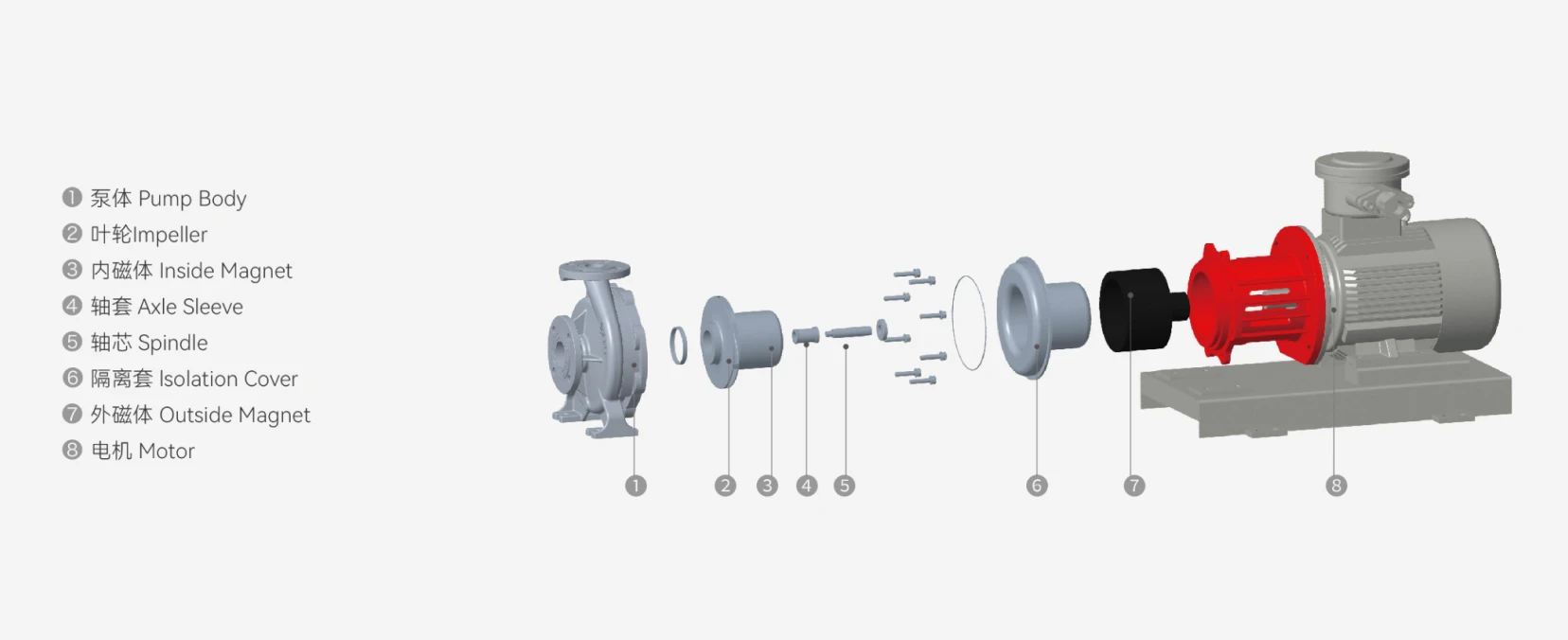
Magnetic Drive Alternatives for Absolute Containment
When the highly corrosive fluid is entirely clean (free of suspended solids) and highly toxic, zero-emission containment becomes the priority. Fluoropolymer-lined magnetic drive pumps eliminate the shaft penetration entirely.
Torque is transmitted magnetically through a static, non-metallic containment shell (usually reinforced PEEK or carbon fiber). Because the shell is non-metallic, it generates zero eddy current losses, eliminating the localized heat generation that limits metallic mag-drive pumps. The fluid contacts nothing but inert fluoropolymer and silicon carbide, achieving absolute corrosion resistance and zero fugitive emissions simultaneously.
System Integration and Material Specification
Deploying a corrosion-resistant pump requires strictly controlling the piping environment. Even armored lined pumps possess lower flange load limits than solid metallic equivalents. Piping must be independently supported; forcing a misaligned pipe onto a plastic-lined flange will cold-flow the polymer, inducing a permanent leak path before the motor is even energized.
Final equipment specification dictates cross-referencing fluid concentration, operating temperature, solid content, and suction pressure against the exact properties of available polymers and sealing mechanisms. Over-specifying exotic alloys wastes capital, while under-specifying fluoropolymer linings invites catastrophic chemical leaks. To configure an armored lined pump or high-alloy solution matched precisely to your aggressive duty cycle, review our comprehensive range of chemical pump architectures designed for the continuous processing of extreme industrial corrosives.