


Phosphoric acid is traded mainly at 75% and 85% concentration, feeds the global fertilizer industry as the intermediate for MAP, DAP and TSP, phosphates and passivates steel in metal finishing lines, acidulates food and beverages, and cleans semiconductor surfaces. It is often described as a mild acid, and pure phosphoric acid on 316L stainless at room temperature behaves accordingly. The engineering reality of pumping it is more demanding. The 85% grade crystallizes at 21 °C, so equipment can freeze solid on a cool night. The viscosity of concentrated acid runs thirty to fifty times that of water and shifts hydraulic sizing. And the wet-process acid that dominates fertilizer production carries chlorides, fluorides and sulfates that turn a moderate corrosion problem into an aggressive one. This guide covers phosphoric acid transfer engineering: crystallization control, viscosity corrections, the pure-versus-wet-process material split, and the magnetic drive configurations proven in this service.
Fluid Profile and Handling Characteristics
| Property | H3PO4 75% | H3PO4 85% |
|---|---|---|
| Specific gravity at 20 °C | 1.58 | 1.685 |
| Viscosity at 20 °C | approx. 15 cP | approx. 45 cP |
| Crystallization point | approx. -17 °C | approx. +21 °C |
| Corrosivity of pure grade | Moderate on 316L at ambient; rises sharply with temperature and impurities | |
| Typical impurities (wet process) | Chlorides, hydrofluoric and fluosilicic acid residues, sulfates, suspended solids | |
Crystallization: The Cold-Weather Failure Mode
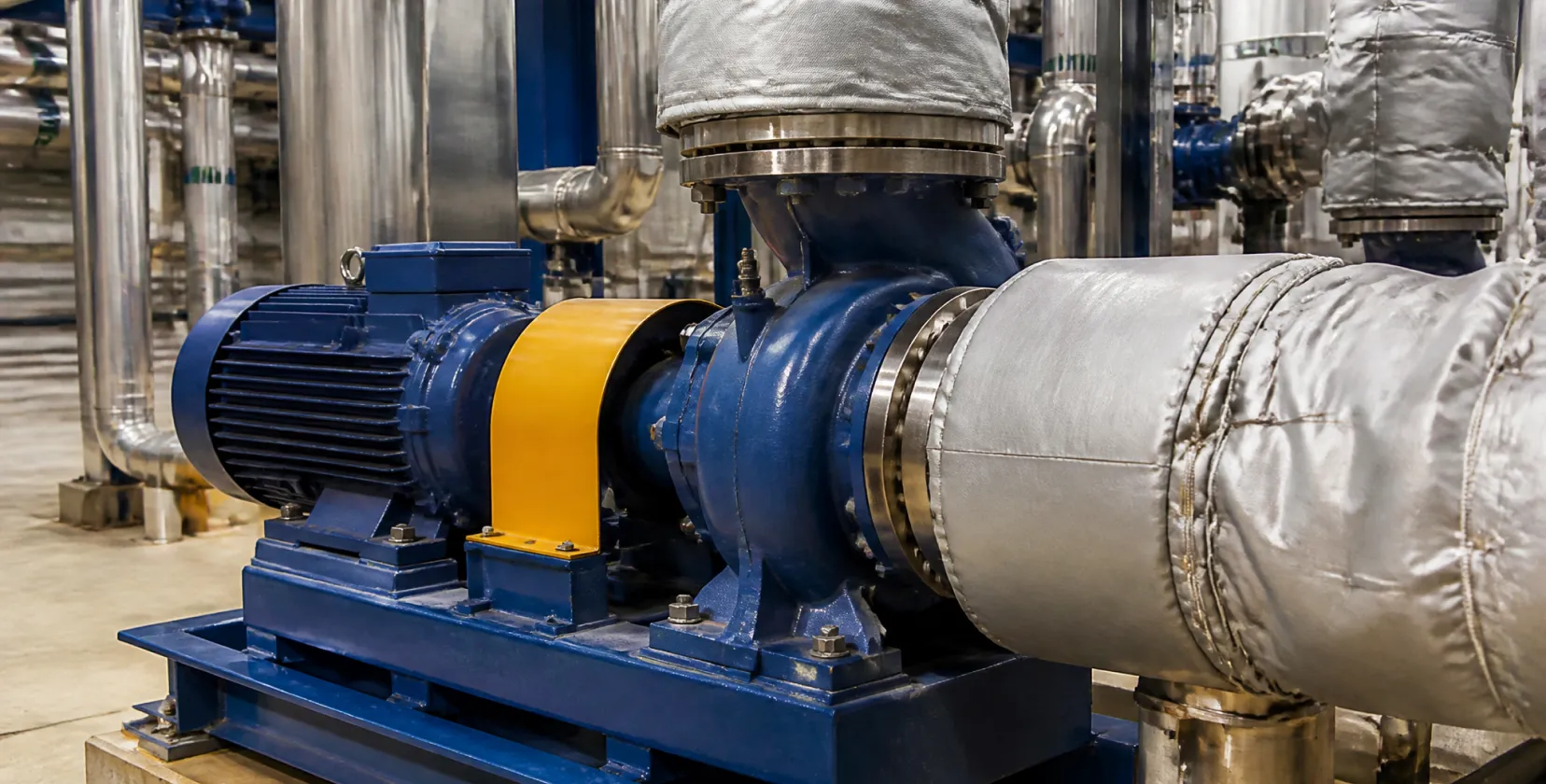
The 85% grade freezes at about 21 °C, which means crystallization is a year-round concern in most climates rather than only a winter problem. Solidified acid blocks suction lines, locks impellers and cracks seal faces on restart. Pumps in 85% service are specified with jacketed or traced casings, drained idle cavities, and operating procedures that flush or drain the pump during extended stops. The 75% grade, with a crystallization point near -17 °C, avoids this constraint and is often chosen for cold-climate terminals even though it ships more water per tonne of P2O5.
Pure Acid Versus Wet-Process Acid
Thermal-process and food-grade phosphoric acid is comparatively pure, and 316L stainless handles it well across ambient duties. Wet-process acid, the fertilizer industry workhorse, is a different fluid: residual chlorides, hydrofluoric and fluosilicic acid, sulfates and fine solids make it substantially more corrosive and mildly abrasive. Material decisions made on pure-acid corrosion tables fail in wet-process service. The practical rule is to identify which acid the plant actually handles before opening a corrosion chart, and to treat any fertilizer-plant duty as wet-process until proven otherwise.
Material Selection for H3PO4 Service
| Material | Suitability in H3PO4 | Main Limitation |
|---|---|---|
| 316L stainless steel | Baseline for pure grades at ambient to moderate temperature | Attacked by chlorides and fluorides in wet-process acid |
| High alloys (Alloy 20, 904L) | Hot concentrated and wet-process service | Cost; still limited in fluoride-rich acid |
| PTFE / PFA / F46 lining | Inert at all commercial concentrations and temperatures within liner limits | Liner temperature ceiling |
| Polypropylene / HDPE | Dilute acid, ambient storage and dosing | Temperature and pressure limits |
| Rubber-lined steel | Traditional in fertilizer plants | Aging, temperature limits, difficult field repair |
| Carbon steel / cast iron | Not suitable | Rapid general corrosion and iron contamination of product |
The table reflects a pattern specific to phosphoric acid: the material question is driven less by the acid itself than by what rides along with it. For pure thermal-process acid at ambient temperature, 316L is an economical and durable answer. Once temperature climbs toward 60-80 °C, or once chlorides and fluorides enter the picture, the choice moves to high alloys or to fluoropolymer-lined construction. A PTFE or PFA wetted path is indifferent to chloride and fluoride content, which makes lined pumps the chemically safe specification where feedstock quality varies between shipments, as it routinely does in merchant wet-process acid. The broader selection logic for aggressive media is outlined on the corrosion-resistant pump solutions for aggressive chemicals page.
Pumping Duties Across Phosphoric Acid Industries
Fertilizer complexes move wet-process acid continuously between reaction, clarification and concentration stages, a service combining corrosion with scaling from gypsum and fluosilicate deposits. Metal finishing plants transfer and recirculate phosphating baths, where temperature sits at 50-70 °C and bath chemistry must stay uncontaminated. Food and beverage producers dose food-grade acid as an acidulant and run it through clean-in-place circuits, where sanitary construction and zero leakage are mandatory; the food pump solutions page covers the hygienic side of these duties. Electronics manufacturers use high-purity grades for wafer cleaning, where metal-ion pickup disqualifies unlined metallic construction. Each industry weights the same shortlist of constraints differently, but crystallization, viscosity and impurity-driven corrosion appear in all of them.
Viscosity and Hydraulic Corrections
At 45 cP and a specific gravity of 1.685, 85% phosphoric acid sits well outside the water-based assumptions of standard pump curves. Head, flow and efficiency all derate on viscous duty, and the correction grows as temperature and viscosity move together. Suction design deserves equal attention: viscous friction raises line losses and erodes NPSH available, so suction lines are sized generously, kept short and run without pockets where acid can stagnate and crystallize. Motor sizing must cover the higher power draw of viscous operation plus the specific-gravity multiplier, and cold-start torque after a crystallization event belongs in the drive calculation rather than being discovered on site. The high-viscosity pump solutions page details the correction method used for fluids of this class.
Why Sealless Containment Fits Phosphoric Acid
Mechanical seals meet a triple problem in this service. First, concentrated acid crystallizes at the seal interface whenever the pump stops in cool conditions, and the crystals score the faces on restart. Second, the suspended solids of wet-process acid abrade faces continuously. Third, food-grade and electronics duties cannot accept any weepage into or out of the product. A magnetic drive pump replaces the dynamic seal with a static containment shell: no rotating shaft penetration, no face to crystallize against, no leakage path in either direction. The wetted bearing set in pressureless-sintered silicon carbide resists both the acid and the mild abrasion of wet-process duty, and in fluoropolymer-lined designs the containment shell is non-metallic, eliminating eddy-current heating of the fluid.
Recommended Configurations for Phosphoric Acid Transfer
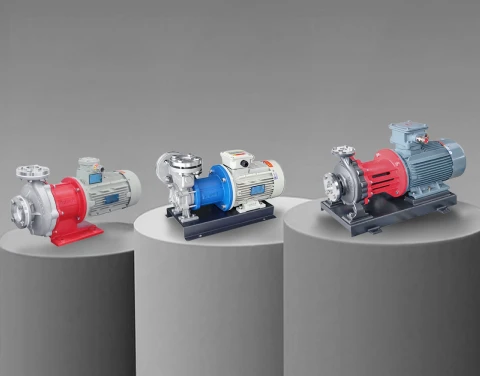
For pure grades and moderate temperatures, the AMC(L) magnetic drive chemical process pump in 316L construction covers flows to 200 m³/h with metallic hydraulic efficiency. For wet-process acid, fluoride-bearing streams, hot concentrated duties and any service where feedstock purity varies, the AMC-F fluoropolymer-lined magnetic drive pump covers 3.6 to 100 m³/h with a one-piece F46 or PFA liner and standard SSiC bearings, keeping every wetted surface chemically inert. Both series carry static containment, so neither presents a seal face to crystallization or scaling. The full corrosion-resistant range is summarized on the chemical pump page.
Installation and Operating Rules
- Identify the acid grade before specifying materials: thermal-process or food-grade acid and wet-process fertilizer acid are different fluids and demand different wetted paths.
- Treat 85% acid as a crystallizing liquid: trace or jacket lines and pump casing, drain idle cavities, and write flush-or-drain procedures for extended stops.
- Apply viscosity corrections to head, flow, efficiency and NPSH rather than reading the water curve directly, and recheck them at the lowest expected operating temperature.
- Size suction lines generously and keep them short and pocket-free, since viscous friction erodes NPSH and stagnant legs become crystallization sites.
- Size the motor for viscous power draw, the 1.58-1.685 specific gravity multiplier and cold-start conditions, not for the water-duty rating point.
- In wet-process service, plan for scaling: provide flush connections, allow inspection access, and monitor discharge pressure trends for deposit build-up.
Send Your Phosphoric Acid Duty for Engineering Review
The right configuration depends on acid grade and origin, concentration, temperature range and duty profile. Send your parameters through the contact page and our engineers will return a sized selection in 316L or fluoropolymer-lined construction, with material confirmation for the specific phosphoric acid your plant handles.
